
Transportation Fuels | Department of Energy
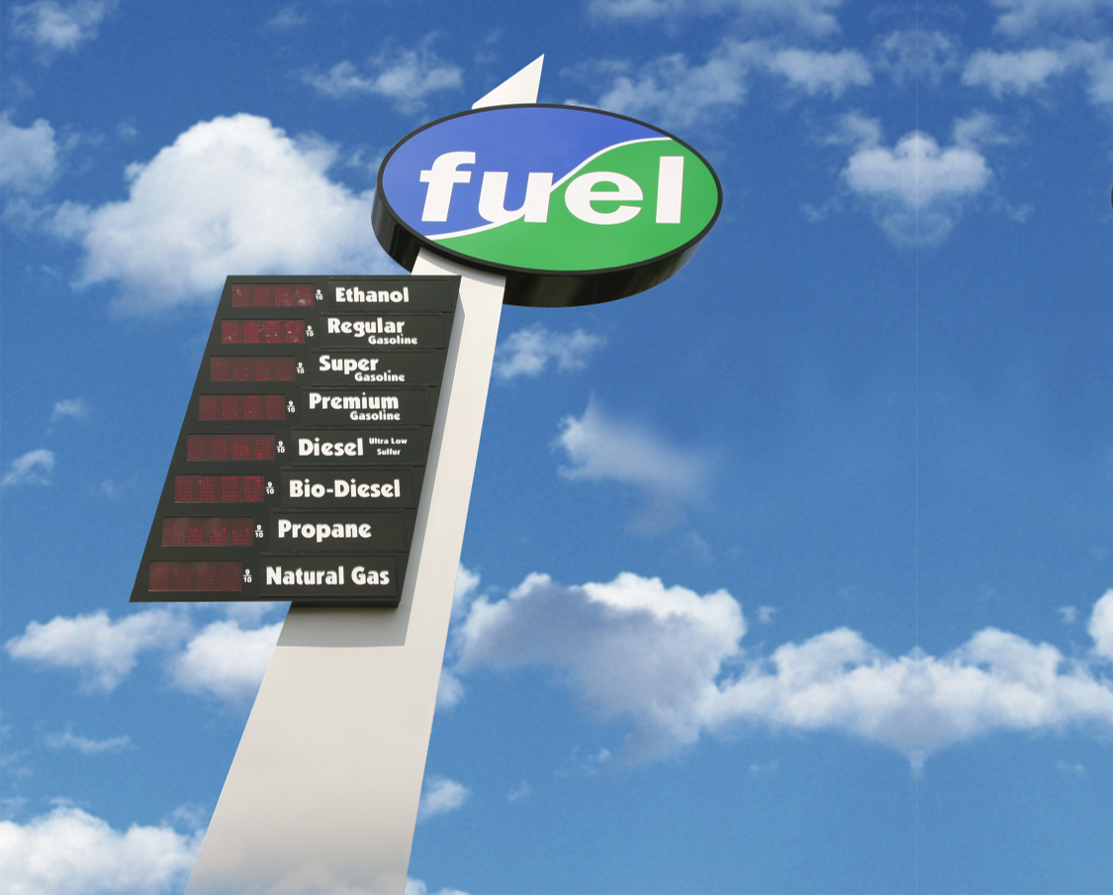
The use of energy is a factor in all our lives. But non-renewable energy sources are diminishing every day, and it is vital that consumers learn about renewable energy sources to help them as they grow to become better informed and more responsible about the energy resources they use.
The United States is a nation on the move. About 28% of total U.S. energy consumption in 2021 was for transporting people and goods from one place to another.
In addition to the dependence factor, one also needs to consider that the greenhouse gas emissions from gasoline-powered vehicles are extensive. Some of these emissions are known or probable human carcinogens.
Gasoline can also impact the environment if spilled, since it spreads on water surfaces and quickly penetrates porous soils and groundwater. The idea of alternative fuels has been around about as long as there been vehicles. In the 1880s, Henry Ford built one of his first automobiles to run on ethanol.
Different types of energy sources (or fuels) are used for transportation in the United States
The use of gasoline for transportation is the most commonly used fuel. However, there are multiple alternative fuels that are becoming more commonplace in today’s market. The major types of energy used for transportation in the United States are:
- Petroleum products—products made from crude oil and from natural gas processing, including gasoline, distillate fuels (mostly diesel fuel), jet fuel, residual fuel oil, and propane
- Biofuels—ethanol and biomass-based diesel/distillates
- Natural gas
- Electricity (produced from many different energy sources)
Petroleum is the Main Source of Energy for Transportation
Transportation by cars and trucks radically changed the face of our country over the last hundred years, with petroleum providing the fuel for our vehicles. We use about 13 million barrels of oil each day to keep us on the move. Americans drive their personal vehicles about 2.3 trillion miles a year with 98 percent of our vehicles running on petroleum or diesel fuels. United States imports two-thirds of all the petroleum we use; therefore, cheaper and renewable alternative fuels would be desirable to reduce our dependence.In 2021, petroleum products accounted for about 90% of the total U.S. transportation sector energy use. Biofuels contributed about 6%. Natural gas accounted for about 4%, most of which was used in natural gas pipeline compressors. Electricity use by mass transit systems provided less than 1% of total transportation sector energy use.
Gasoline is the Most Commonly Used U.S. Transportation Fuel
Gasoline is the dominant transportation fuel in the United States, followed by distillate fuels (mostly diesel fuel) and jet fuel. Gasoline includes aviation gasoline and motor gasoline. Finished motor gasoline includes petroleum gasoline and fuel ethanol. Fuel ethanol includes ethanol (a biofuel) and petroleum denaturants. On an energy content basis, finished motor gasoline accounted for 58% of total U.S. transportation energy use in 2021, while distillate fuels, mostly diesel, accounted for 24%, and jet fuel accounted for 11%. In the chart above (U.S. transportation energy sources/fuels, 2021), the energy content of gasoline, distillates, and jet fuel exclude the energy content of biofuels blended into those fuels. The energy content of biofuels excludes any petroleum fuels content, such as fuel ethanol denaturants.1
Biofuels are Added to Petroleum Fuels
Ethanol and biodiesel were some of the first fuels for automobiles but were replaced by gasoline and diesel fuel made from crude oil. Today, most of finished motor gasoline contains up to 10% ethanol by volume. Most of biodiesel and renewable diesel fuel consumption is in blends with petroleum diesel. In 2021, total biofuels consumption accounted for about 5% of total U.S. transportation sector energy consumption, with ethanol’s share at about 4%, and the combined percentage share of biodiesel, renewable diesel, and other biofuels was about 1%.
Energy Sources are Used in Several Major Ways
- Gasoline is used in cars, motorcycles, light trucks, and boats. Aviation gasoline is used in many types of airplanes.
- Distillate fuels are used mainly by trucks, buses, and trains and in boats and ships.
- Jet fuel is used in jet airplanes and some types of helicopters.
- Residual fuel oil is used in ships.
- Biofuels are added to gasoline and diesel fuel.
- Natural gas, as compressed natural gas and liquefied natural gas, is used in cars, buses, trucks, and ships. Most of the vehicles that use natural gas are in government and private vehicle fleets.
- Natural gas is also used to operate compressors to move natural gas in pipelines.
- Propane (a hydrocarbon gas liquid) is used in cars, buses, and trucks. Most of the vehicles that use propane are in government and private vehicle fleets.
- Electricity is used by public mass transit systems and by electric vehicles.
Cars, vans, and buses are commonly used to transport people. Trucks, airplanes, and trains are used to move people and freight. Barges and pipelines move freight or bulk quantities of materials.
Cars, light trucks, and motorcycles account for the largest shares of total U.S. transportation sector energy consumption.
Estimates for the percentage shares of total U.S. transportation energy use by types or modes of transportation in 2021 are:
- light-duty vehicles (cars, small trucks, vans, sport utility vehicles, and motorcycles) 54.2%
- commercial and freight trucks 24.5%
- jets, planes, and other aircraft 8.7%
- boat, ships, and other watercraft 4.6%
- trains and buses 2.6%
- the military, all modes 2.0%
- pipelines 2.8%
- lubricants 0.5%
U.S. gasoline consumption for transportation has increased even though overall fuel economy in cars and light trucks has improved
The national average fuel economy for light-duty vehicles, which include passenger cars, pickup trucks, vans, sport utility vehicles, and crossover vehicles, has improved over time largely thanks to fuel economy standards the federal government established for those types of vehicles. However, total motor gasoline consumption for transportation has generally increased after fuel economy standards were set because of increases in the number of vehicles in use—especially light pickup trucks, minivans, sport utility vehicles, and crossover vehicles, which have lower fuel economy than many passenger cars—and in the number of miles traveled per vehicle
Alternate Fuels
The alternative fuels that are being actively explored by the Department of Energy include: methanol; propane; ethanol; compressed and liquefied natural gas; electricity; hybrid electricity; biodiesel; and hydrogen fuel cells. Factors such as cost, fuel distribution, emissions, vehicle systems analysis, energy storage, power and propulsion systems, and advanced power electronics are just some of the considerations in phasing in alternative fuels and advanced vehicle design.
Ethanol
Ethanol is a clear, colorless alcohol fuel made by fermenting the sugars found in grains—such as corn and wheat—as well as potato wastes, cheese whey, corn fiber, rice straw, urban wastes, and yard clippings. There are several processes that can produce alcohol (ethanol) from biomass. The most commonly used processes today use yeast to ferment the sugars and starch in the feedstock to produce ethanol. A new process uses enzymes to break down the cellulose in woody fibers, making it possible to produce ethanol from trees, grasses, and crop residues. In the 1970s, the oil embargoes revived interest in ethanol as an alternative fuel. Today, more than fifty ethanol plants, mostly in the Midwest, produce over a billion gallons of ethanol. Gasoline containing ten percent 218 This lesson plan may contain links to other resources, including suggestions as to where to purchase materials. These links, product descriptions, and prices may change over time. ethanol—E10—is widely used in urban areas that fail to meet standards for carbon monoxide and ozone. Since ethanol contains oxygen, using it as a fuel additive results in up to 25 percent fewer carbon monoxide emissions than conventional gasoline. E10 is not considered an alternative fuel under EPACT, but a replacement fuel.
Electricity
In 1891, William Morrison of Des Moines, Iowa, developed the first electric car. By the turn of the century, dedicated electric vehicles (EVs) outnumbered their gasoline-powered counterparts by two-to-one. Today there are about 10,500 dedicated EVs in use in the United States, mostly in the West and South. Researchers are still working on the same problem that plagued those early dedicated EVs: the need for an efficient battery. The batteries limit the range of a dedicated EV, which is determined by the amount of energy stored in its battery pack. The more batteries a dedicated EV can carry, the more range it can attain, to a point. Too many batteries can weigh down a vehicle, reducing its load-carrying capacity and range, and causing it to use more energy. The typical dedicated EV can only travel 50 to 130 miles between charges. This driving range assumes perfect driving conditions and vehicle maintenance. Weather conditions, terrain, and some accessories use can significantly reduce the range.
Hybrid Electricity
Hybrid Electric Vehicles (HEVs) may be the best alternative vehicle for the near future, especially for the individual consumer. HEVs offer many of the energy and environmental advantages of the dedicated electric vehicle without the drawbacks. Hybrids are powered by two energy sources: an energy conversion unit (such as a combustion engine or fuel cell) and an energy storage device (such as battery, flywheel, or ultracapacitor). The energy conversion unit can be powered by gasoline, methanol, compressed natural gas, hydrogen, or other alternative fuels. HEVs have the potential to be two to three times more fuel-efficient than conventional vehicles. An HEV battery doesn’t have to be recharged. It has a generator powered by the internal combustion engine to recharge the batteries whenever they are low. A regenerative braking system captures excess energy when the brakes are engaged. The recovered energy is also used to recharge the batteries.
Biodiesel
Biodiesel is a fuel made by chemically reacting alcohol with vegetable oils, fats, or greases, such as recycled restaurant greases. It is most often used in blends of two percent or 20 percent (B20) biodiesel. It can also be used as neat biodiesel (B100). Biodiesel fuels are compatible with and can be used in unmodified diesel engines with the existing fueling infrastructure. It is the fastest growing alternative transportation fuel in the U.S. Biodiesel contains virtually no sulfur, so it can reduce sulfur levels in the nation’s diesel fuel supply. Removing sulfur from petroleum-based diesel results in poor lubrication. Biodiesel is a superior lubricant and can restore the lubricity of diesel fuel in blends of only one or two percent. Biodiesel can also improve the smell or diesel fuel, sometimes smelling like french fries.
Hydrogen Fuel Cell
Hydrogen may provide a significant contribution to the alternative fuel mix. The space shuttles use hydrogen for fuel. Fuel cells use hydrogen and oxygen to produce electricity without harmful emissions; water is the main by-product. Hydrogen is a gas at normal temperatures and pressures, which presents greater transportation and storage hurdles than liquid fuels. No distribution system currently exists. Today, the predominant method of producing hydrogen is steam reforming of natural gas, although biomass and coal can also be used as feedstocks.
Propane
Propane is an energy-rich fossil fuel often called liquefied petroleum gas (LPG). It is colorless and odorless; an odorant called mercaptan is added to serve as a warning agent. Propane is a by-product of petroleum refining and natural gas processing. And, like all fossil fuels, it is nonrenewable.
Propane has been used as a transportation fuel for more than half a century and is the most widely used and most accessible alternative fuel. Today about three percent of total propane consumption is used to fuel 270,000 vehicles, mostly in fleets. For fleet vehicles, the cost of using propane is 5 to 30 percent less than for gasoline.
The chemical formula for propane is C3H8. Under normal atmospheric pressure and temperature, propane is a gas. Under moderate pressure and/or lower temperature, however, propane can easily be changed into a liquid and stored in pressurized tanks. Propane is 270 times more compact in its liquid state than it is as a gas, making it a portable fuel.
Methane
Methane, the natural gas we use for heating, cooking, clothes drying, and water heating, can also be a clean burning transportation fuel when compressed (CNG) or liquefied (LNG). Compressed natural gas (CNG) vehicles emit 85-90 percent less carbon monoxide, 10-20 percent less carbon dioxide, and 90 percent fewer reactive non-methane hydrocarbons than gasoline-powered vehicles. (Reactive hydrocarbon emissions produce ozone, one of the components of smog that causes respiratory problems.) These favorable emission characteristics result because natural gas is 25 percent hydrogen by weight; the only combustion product of hydrogen is water vapor. Natural gas is usually placed in pressurized tanks when used as a transportation fuel. Even compressed to 2,400-3,600 pounds per square inch (psi), it still has only about one-third as much energy per gallon as gasoline. As a result, natural gas vehicles typically have a shorter range, unless additional fuel tanks are added, which can reduce payload capacity. With an octane rating of 120+, power, acceleration and cruise speed are comparable.
Methanol
Methanol, or wood alcohol, is a colorless, odorless, toxic liquid. Methanol is the simplest alcohol (CH3OH), produced by replacing one 217 This lesson plan may contain links to other resources, including suggestions as to where to purchase materials. These links, product descriptions, and prices may change over time. hydrogen atom of methane with a hydroxyl radical (OH). Methanol can be produced from natural gas, coal, residual oil, or biomass.
Although vehicles can operate on pure methanol fuel (M100), methanol blended with 15 percent unleaded gasoline–M85- is more practical for real world applications. Because methanol is a liquid fuel, it does not require major changes in the distribution system or in car engines, but no major auto manufacturers offer M85 compatible vehicles at this time. The cost of M85 is equal to or slightly higher than premium blends. M85 has a lower energy content per gallon, so mileage is lower; but power, acceleration and payload capacity are comparable to gasoline. Vehicles using methanol, however, must use a special, expensive lubricant.
link