Experts say variation the hallmark of 2025 property market

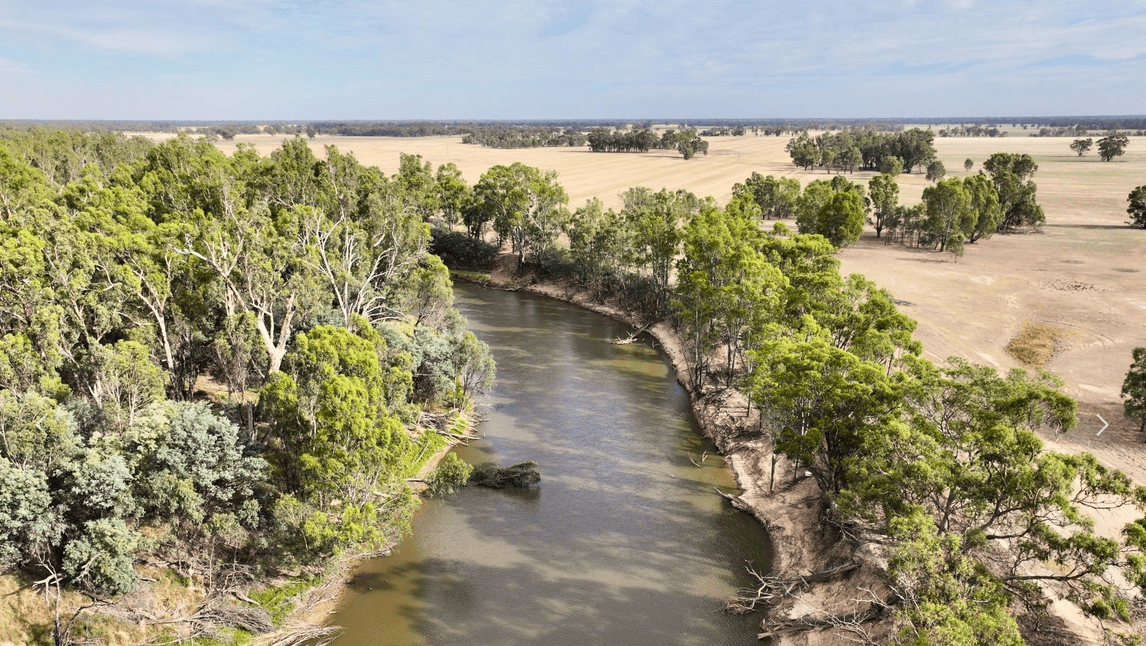
The Summit Aggregation in northern Victoria’s Nathalia district features frontage to the Goulburn River, and sold this year. Photo: Inglis Rural Property
IN OUR FINAL week of publishing for 2025, experts from four rural property agencies reflect on the year that was.
Sam Triggs, Inglis Rural Property
Inglis Rural Property chief executive officer Sam Triggs reports the 2025 rural property market has been characterised by significant variation, with buyers behaving astutely and selectively, yet overall activity remains robust.
“In some cases, transaction outcomes have been notably bullish, while others reflect more challenging conditions,” Mr Triggs said.
“New South Wales is generally stabilising after experiencing a 10 to 15 percent correction during 2024.
“Buyers remain highly selective and vendors with well-presented assets, underpinned by professional management, are being rewarded.”
Mr Triggs said the office has facilitated several major transactions across eastern Australia in the $15-$30-million range in both Victoria and NSW.
“Investment demand has largely been driven by off-farm capital seeking high-quality commercial mixed-farming properties, including cropping and livestock.”
Mr Triggs said the strongest sale outcomes are generally “circumstantial”; in other words, they are must-have acquisitions for neighbours, strategic purchases for investors, or flagship properties that rarely come to market.
“A notable trend is the heightened focus on the percentage of arable land, even for grazing enterprises, as buyers prioritise ease of management and the capacity for development and improvement.”
Mr Triggs identified a standout property transaction as Summit Aggregation, near Nathalia in Vic, that sold in June for around $15M.
“The asset generated strong interest from both corporate groups and local investors but ultimately sold to a local farming family.
“The Inglis team has also managed two off-market transactions in the $22M to $30M range, in line with vendors’ confidentiality preferences.”
In terms of a standout region, Mr Triggs named the Southern Tablelands region of NSW around Goulburn, Yass and Crookwell as performing strongly due to sustained investment from both local farmers and external groups.
“Traditionally dominated by grazing enterprises, the region has evolved with grazing crops, forestry, renewable energy interests and alternative investor profiles all underpinning demand.”
“High-net-worth investors continue to seek commercial farmland within proximity to Sydney and Canberra, with the Sydney-to-Albury corridor remaining an attractive zone for off-farm capital,” he said.
Mr Triggs said currently, the most active buyers are off-farm investors seeking stable asset classes, along with institutional investors with mandates for cropping, redevelopment and hybrid carbon farming projects.
“For private off-farm investors, many have recently exited businesses or other major investments and now view agriculture as a sector offering reliable capital growth prospects and relatively stable land values – a safe place to deploy capital amid
global economic and geopolitical volatility.”
Tom Russo and Mark Barber, Elders
Elders Real Estate divisional CEO Tom Russo observed the 2025 rural property market experienced a significant transition following several years of rapid growth.
“In recent years, Australia has experienced a golden era in terms of farmland value appreciation,” Mr Russo said.
“Explosive growth saw national agricultural land values more than double since the pandemic, with 2021 and 2022 delivering annual growth rates of around 25pc.”
Mr Russo explained it as a story of supply and demand, with many contributing factors.
He identified the key drivers as historically low interest rates and farm debt, robust capital appreciation resulting in strong farmer balance sheets, record farm deposits, and strong commodity prices.
Mr Russo also believes the rural property sector is maturing and attracting increased institutional investment.
“In relative terms, institutional investment in agricultural land holdings is a new thing.
“Given the strong macro outlook for agriculture, many have sought to allocate funds to agriculture as part of a diversified portfolio strategy.
“Active fund managers have also been able to prove themselves and therefore attract further capital.
“This has resulted in increased capital flows which have largely outweighed supply or investment opportunities.
“This has led to rapid price increases and consolidation of farmland holdings.”
Mr Russo noted the market fundamentally shifted in 2024-25 as prices plateaued.
He described it as inevitable, saying it marked the end of one of the most dramatic rural-property cycles in Australian history.
“On a national basis, 2024 delivered 2pc cent in capital growth; fundamentally, you can’t keep achieving capital growth at that rate and maintain acceptable returns on capital or meet bank serviceability requirements.”
Mr Russo also highlighted tough seasonal conditions, volatile commodity prices, especially in cattle and sheep markets, global economic uncertainty and geopolitical volatility, including US tariffs on beef, as creating uncertainty and impacting market confidence, resulting in people being less bullish on new investments.
“In light of this, transaction volumes virtually halved, while average days on market doubled.
“This is not a bad thing for pricing as it will ensure there isn’t an oversupply, but it has created some market paralysis, with people waiting to see what happens.”
Mark Barber heads up Elders’ Agribusiness Investment Services and said seasonal conditions influenced this year’s rural property market.
“The grain property market was a tale of two halves,” Mr Barber said.
“Western Australian land prices benefited from continued strong confidence characterised by low turnover and strong prices for good quality land at scale.
“While caution was the theme on the east coast as the market waited to see how the season would unfold following very dry conditions last year.”
Mr Barber said one of the standout cropping property sales this year was the Tara Moira Aggregation near Trundle, in a region offering value for money but sometimes overlooked by buyers.
The district’s largest contingent mixed farming operation spanning 4327ha was sold to a Condobolin family, together with 3331ha of crops.
It runs 5000 sheep, with a 4000-head lamb feedlot turning off up to 19,500 head a year.
More than 95pc is arable, producing winter cereals, oilseeds and pulses.
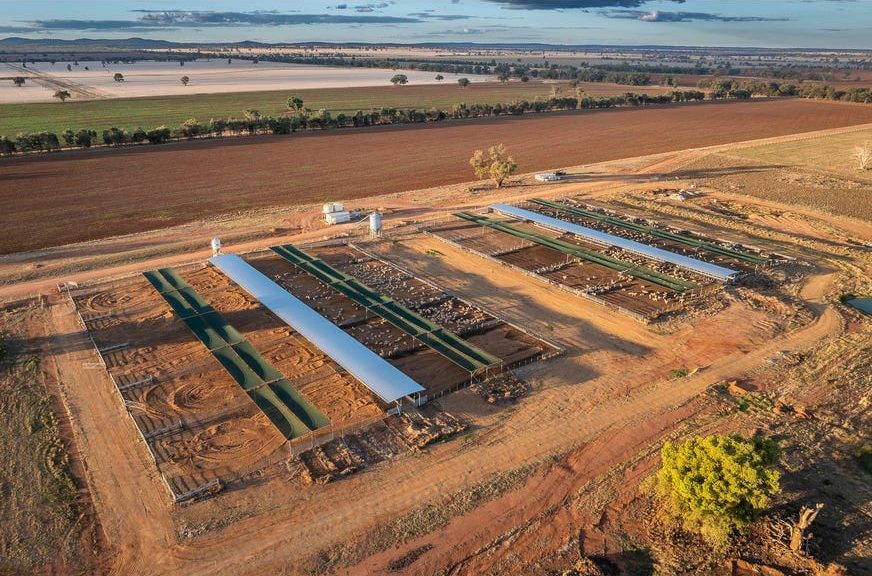
The Tara Moira listing included a lamb feedlot. Photo: Elders
Mr Barber pointed to WA as the standout region.
“WA saw strong prices and high demand for quality cropping assets.
“The low turnover indicated farmers were holding onto land as the state entered its fourth year of record or near-record crop production.”
Mr Barber said Elders services all segments of the market, but family farms have been and continue to be the dominant and most active buyer in the market.
“Even at institutional levels, family farms backed by large-scale long-term investors are active and competitive.
“The successful family farms are corporatising and take a disciplined but intergenerational view of investing.”
Rawdon Briggs, Colliers Agribusiness
Rawdon Briggs is the head of rural and agribusiness at Colliers.
He said livestock assets across Australia have become increasingly attractive, driven by significant commodity price changes for beef, lamb and sheep protein.
“These trends are supported by global tailwinds, with stable to slightly increased returns in high-rainfall grain and cotton cropping assets,” Mr Briggs said.
“New South Wales’ Riverina and Victoria’s Wimmera, after a slow start to rainfall, finished the year strongly, with most regions experiencing soft to excellent spring conditions; this is reflected in CBH and GrainCorp receival tonnages.”
Mr Briggs identified The Oaks as a standout transaction.
“The premium mixed-farming enterprise in Western Australia sold to a local family after just 11 days on the market, surpassing price guidance and demonstrating the continued demand for high-quality, scalable farming assets.”
Regarding buyer activity, Mr Briggs found large family buyers with professional advice and scalable balance sheets were the fastest movers in today’s market.
He said offshore investors continue to target scale and quality, reflecting the global appetite for Australian agriculture as a natural hedge to North American assets.
“There is a significant recovery in the New Zealand agricultural market, which is about 12 months ahead of what we expect to see in Australian farmland liquidity.
“Interest from highly engaged offshore capital will continue, driven by demand for
food and fibre.”
Danny Thomas, LAWD
LAWD senior director Danny Thomas described 2025 as a year of recovery and consolidation after a relatively quiet 2024.
“The last 12 months have experienced a fair bit of activity, particularly in the family space,” Mr Thomas said.
“Many of the larger deals in both the grazing and cropping markets have been secured by producers who are expanding, with strong competition from Central Queensland producers, those in organics, and Wagyu breeders.”
Mr Thomas cited the One Tree Portfolio which was bought to the market by the US based Proterra Investment Partners in July last year.
“Most of the institutional-grade asset, which raised $220 million, sold to Australians.”
Four farming families purchased the 7934ha Umbercollie Aggregation north-west of Goondiwindi for $53M, while Gina Rinehart’s Hancock Agriculture secured 80pc of the 9966ha Jandowae Aggregation on Qld’s Darling Downs for $90M bare.
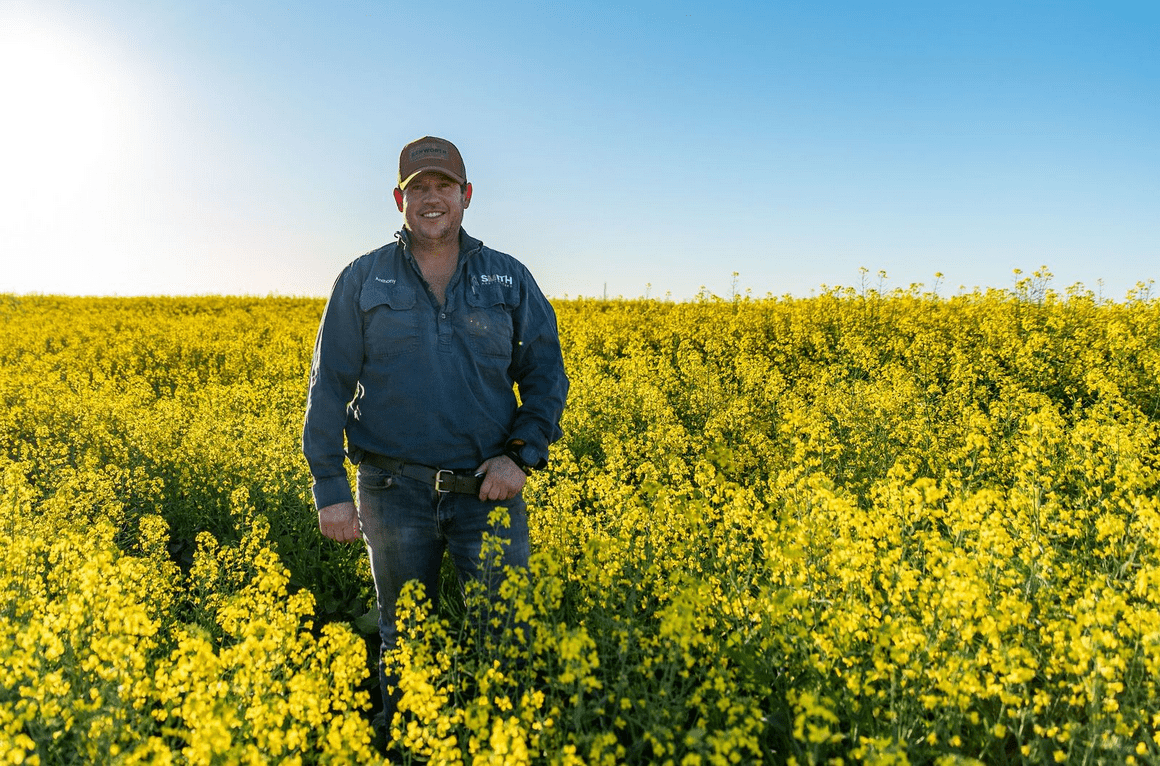
Anthony Smith in his paddock of canola on North Callandoon in southern Qld.
The third holding, the 5694ha North Star Aggregation in northern NSW, sold to Alkira Farms, an investment arm of the Farmland Reserve owned by the Utah-based Church of Jesus Christ of Latter-day Saints, for $68M.
It also purchased the Chudleigh family’s country near Kentucky in an over-the-fence deal, and paid $38M bare for the 6020ha Kentucky Aggregation between Forbes and West Wyalong in NSW’s Central West.
Mr Thomas identified southern Qld, including the Darling Downs, as a standout.
“For a long time, the tightly held region had been in a holding pattern.
“However, following more favourable seasonal conditions and bumper crops, 2025 has witnessed increased sales activity.”
Last month, the 2094ha Dalby Aggregation, a premium dryland cropping opportunity in Qld’s Western Downs region, was split up, with two of three holdings – the 1430ha Daybreak and 226ha Thompsons – selling to neighbouring farm operators for expansion for more than $20M.
Another attractive reason for investors, but one Mr Thomas would not comment on, was Gina Rinehart’s increased presence in the Darling Downs.
Thoughts for next year
On the back of this period of recovery and consolidation, and in relation to grain, Mr Thomas urged readers to “watch this space”.
“Farmers in areas experiencing a bunker-buster, such as Western Australia’s Wheatbelt, will be looking to expand, even in the face of slightly lower prices, because they have had extraordinary yields which will be very profitable.”
Conversely, he said, the market will track sideways in other geographies where the season has been poor and as a result, farmers will be less profitable.
Mr Thomas said the smart money will act early in 2026 and by the end of next year, property prices will have jumped.
“People will be surprised at how quickly properties currently available in the market will be taken up.
Once that happens, potential buyers will be competing strongly for a limited number of assets.”
Mr Thomas anticipates massive institutional investment from all of the usual suspects, including North America and Europe.
This is Grain Central’s final weekly property review for 2025. I wish all readers and our property industry contacts across Australia, a Merry Christmas and a safe and happy New Year.
Our weekly property reviews will return in February 2026.
In the meantime, readers may be interested in perusing our “Properties for Sale” listings or our “Recent Property Sale Results” – both featuring easy-to-use search functions – Linda Rowley, property editor.
link