China Is Trying To Saturate Global Auto Market With Shady Sales: Report

China has had more than 300 domestic automakers developing and building new cars for years, with the local government pushing the market to boost sales figures and pump up supply. But there’s a problem – China’s domestic market doesn’t have enough demand for such an influx of vehicles despite its massive population.
So now, the Chinese government is allegedly incentivizing exporters to take new cars right from the production line and sell them as used in foreign markets, artificially deflating prices in those markets and pushing out international competition. This ongoing price war is bad news for foreign automakers in international markets, even those that produce domestically in China, including Tesla.

Tesla
Tesla, Inc. is an American electric vehicle manufacturer largely attributed to driving the EV revolution. Through the Model S and subsequent products, Tesla has innovated and challenged industry conventions on numerous fronts, including over-the-air updates, self-driving technology, and automotive construction methods. Tesla is considered the world’s most valuable car brand as of 2023, and the Model Y the world’s best-selling car in the same year, but the brand’s greatest achievement is arguably the Supercharger network of EV charging stations.
- Founded
-
July 1, 2003
- Founder
-
Martin Eberhard, Marc Tarpenning
- Headquarters
-
Austin, Texas, USA
- Current CEO
-
Elon Musk
Fake Used Cars From China
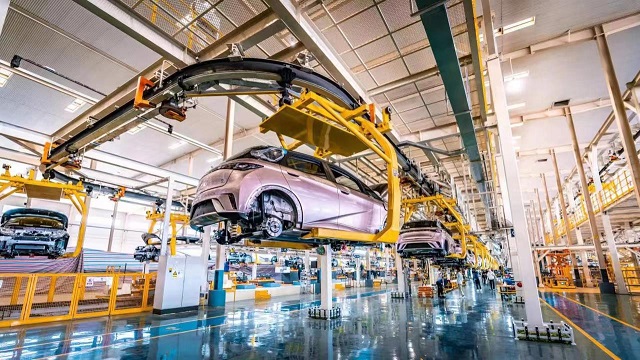
The process begins with the mandated production and sales targets that come down from the government, dictating to its state-controlled industries what targets they need to hit. If they meet those sales targets, there are incentives like promotions and expanded budgets. Those who fail to meet targets are often punished by the state. This has led to auto dealers, exporters, and other outside companies buying Chinese domestic vehicles right off the assembly line as new, and then immediately shipping them to the Middle East, Central Asia, and Russia where they’re sold at lower prices as “fake” used models.

Related
The 10 Biggest Car Markets In The World
In some countries, car sales are up. In others, it is less rosy. The latest stats show which countries sold the most cars in 2024.
The Government Is Well Aware Of The Problem It’s Creating
Reuters reports that local governments incentivize this shady practice by creating the licenses necessary to produce, register, and then ship the vehicles, speeding up tax incentive rebates, expanding the necessary support infrastructure for moving such high volumes of vehicles around easily, and even hosting networking events to expand the operations. A new car is built, it gets a Chinese registration and license plate, and then the exporter ships it off as a new “used” model, with the automaker logging an easy sale, notably marked as a domestic transaction to meet critical government targets. At the volume with which China produces vehicles, this is beginning to have an impact on the targeted markets and the competition.
Some Chinese representatives openly praise the practice and don’t shy away from the details at public events. This certainly suggests the government is well aware that it’s over-producing new vehicles, deflating prices, diminishing demand, and hurting global competition, all for the sake of boosting numbers to keep politicians happy. Looking beyond the numbers, one might say the Chinese government is also keen on dominating the global automotive market. The reason you don’t see these vehicles flooding American shores is because of an existing 100% tariff on Chinese vehicles in the US.

Related
Automakers Want Europe To Reduce Regulations So It Can Compete With China
Stellantis and Renault both urged the EU to consider lower safety standards for a new class of cheap city car.
Curiously, the news of these shady global sales practices comes as the domestic Chinese market starts to shift from growth to shrinkage. The largest Chinese automaker, BYD, has already begun scaling back production and plans to expand those production lines as the market begins to shift. Some Chinese officials are already talking about market consolidation of some of the hundreds of existing automakers, so things are likely about to get chaotic in the Chinese marketplace.
Source: Reuters
link