
Africa Safari Tourism Market Set to Reach US$ 25.7 Bn by 2032,
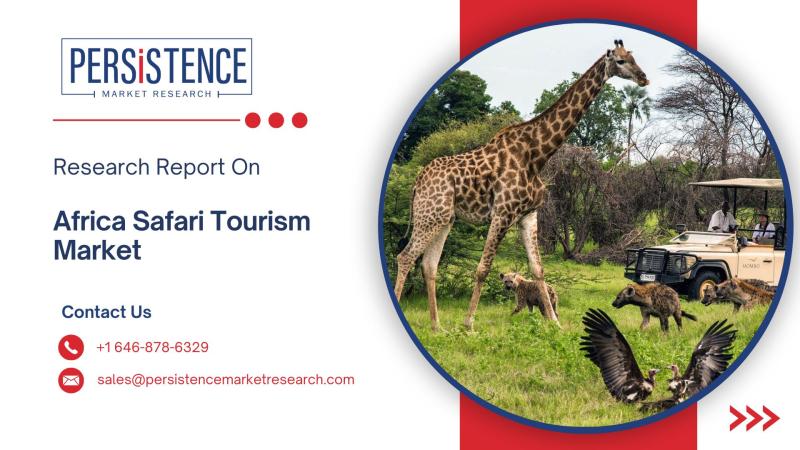
Africa Safari Tourism Market
Africa’s safari tourism market is charting a promising trajectory, with an estimated increase in market value from US$ 17.3 Bn in 2025 to US$ 25.7 Bn by 2032, growing at a compound annual growth rate (CAGR) of 5.8%. According to Persistence Market Research, this growth signals a revived interest in experiential travel, wildlife exploration, and conservation-centered tourism. The continent’s diverse landscapes, from the savannahs of Kenya to the wildlife reserves of South Africa, offer a one-of-a-kind experience attracting both leisure and luxury travelers.
As travelers prioritize authentic and sustainable experiences, Africa’s safari tourism is undergoing a dynamic transformation. The market’s momentum is reinforced by increasing international arrivals, government support for eco-tourism initiatives, and improved travel infrastructure. With wildlife-based tourism contributing significantly to GDP in countries like Tanzania and Botswana, the sector is fast becoming a cornerstone for economic development and biodiversity preservation.
Elevate your business with comprehensive market data. Request a sample report now: https://www.persistencemarketresearch.com/samples/35088
✅Overview of the Market, Market Statistics, Key Growth Drivers, and Leading Segment
The Africa safari tourism market is forecasted to witness robust expansion, moving from US$ 17.3 Bn in 2025 to US$ 25.7 Bn by 2032, marking a CAGR of 5.8% over the period. This growth is being steered by a rising global interest in eco-friendly travel and immersive cultural experiences. Post-pandemic recovery in the travel and tourism sector has rejuvenated international tourist flows, especially to safari hotspots such as Kenya, Tanzania, Namibia, and South Africa.
A key factor behind this growth is the increasing emphasis on wildlife preservation and responsible tourism. Tour operators and governments are focusing on sustainability and promoting packages that blend adventure with conservation. Notably, South Africa stands out as the leading geographical segment, thanks to its advanced infrastructure, global air connectivity, and iconic wildlife parks like Kruger National Park. In terms of market segmentation, luxury safari packages remain the leading product type, drawing high-net-worth tourists seeking bespoke experiences.
✅Key Highlights from the Report:
➤The Africa safari tourism market is projected to reach US$ 25.7 Bn by 2032.
➤A CAGR of 5.8% is expected between 2025 and 2032.
➤South Africa is forecasted to dominate the regional landscape due to superior infrastructure.
➤Luxury safari packages are the top-selling segment by revenue.
➤Sustainable and eco-conscious travel trends are significantly influencing market growth.
➤Government support and wildlife conservation initiatives are boosting tourism potential.
📊 Market Segmentation:
The Africa safari tourism market is segmented primarily based on package type, travel purpose, and customer demographics. Luxury safari tours dominate the segment, offering premium services such as private game drives, luxury lodges, and exclusive wildlife experiences. These packages are highly sought-after by affluent international travelers. Budget safaris and mid-range offerings are also gaining momentum, especially among young travelers and backpackers, attracted by overland tours, community stays, and immersive local experiences.
Another crucial segmentation is based on the purpose of travel, with leisure tourism taking the lead. Safari experiences, coupled with cultural and culinary exploration, form the core of African leisure travel. In contrast, educational and conservation safaris are emerging as significant sub-segments, attracting NGOs, researchers, and academic groups. There’s also a growing trend in family-oriented and multi-generational travel, as well as honeymoon safaris, which blend adventure with exclusivity.
📊 Regional Insights:
Southern Africa holds a commanding share in the Africa safari tourism market, with South Africa leading the way due to well-established wildlife reserves, luxury hospitality, and diverse landscapes. Countries like Botswana and Namibia are gaining popularity due to their untouched natural settings and commitment to low-impact tourism. The region’s investment in eco-lodges and community-based projects has made it an exemplar of sustainable travel.
East Africa, comprising Kenya, Tanzania, and Uganda, follows closely behind. This region is globally renowned for the Great Migration, Mount Kilimanjaro, and the Big Five safaris. Tourists are drawn to iconic parks like Serengeti and Masai Mara, supported by well-developed tourist services and increasing international flights. East Africa continues to strengthen its market position through marketing campaigns and conservation-driven tourism initiatives.
✅Market Drivers
The Africa safari tourism market is driven by the global shift towards experiential and sustainable travel. Tourists are increasingly seeking authentic encounters with nature, wildlife, and local cultures-making safari destinations immensely attractive. Government policies supporting eco-tourism, combined with partnerships with conservation bodies, have elevated Africa’s profile on the global tourism stage. The growing millennial and Gen Z interest in responsible travel also adds momentum, as they favor eco-conscious itineraries and voluntourism opportunities.
Rising disposable incomes in emerging markets and increased connectivity to African destinations have further spurred inbound tourism. Moreover, the growth of digital platforms has simplified the travel planning process, allowing travelers to easily access and book safari packages, compare prices, and explore customized itineraries. Enhanced safety standards and political stability in several African countries are additional enablers.
✅Market Restraints
Despite its growth prospects, the Africa safari tourism market faces several constraints. A major challenge is the high cost of safari travel, especially luxury packages, which restricts access for budget-conscious travelers. Political instability in some regions and concerns over safety can deter tourists. Underdeveloped infrastructure in remote areas can hamper access to safari locations, affecting the overall tourist experience.
Other obstacles include seasonal fluctuations, with most safaris concentrated in dry months, limiting year-round revenue generation. Additionally, environmental challenges like droughts and climate change can disrupt wildlife patterns, affecting safari experiences. Visa complexities and limited direct international flight routes to certain countries also present logistical hurdles.
✅Market Opportunities
The market holds immense potential for growth and innovation. There’s a rising demand for sustainable and conservation-based tourism, providing an opportunity for eco-lodges, green travel services, and responsible wildlife encounters. Tour operators and governments can tap into this trend by investing in low-impact infrastructure and promoting carbon-neutral travel.
Another promising area is digitization and smart tourism. Integrating virtual reality, AI-driven trip planning, and mobile apps can enhance the pre-travel and on-site experience. Community-based tourism also presents a unique opportunity-offering tourists authentic cultural experiences while empowering local communities economically. Expanding medical and wellness tourism alongside safari offerings could further diversify the market.
Do You Have Any Query Or Specific Requirement? Request Customization of Report: https://www.persistencemarketresearch.com/request-customization/35088
👉Frequently Asked Questions (FAQs):
➤How Big is the Africa Safari Tourism Market?
➤What is the Projected Growth Rate of the Africa Safari Tourism Market?
➤Which Region is Estimated to Dominate the Industry through the Forecast Period?
➤Who are the Key Players in the Global Market for Safari Tourism?
➤What is the Market Forecast for Safari Tourism by 2032?
📌 Key Players
✦ &Beyond
✦ African Travel Inc.
✦ Wilderness Safaris
✦ Micato Safaris
✦ Abercrombie & Kent Ltd.
✦ Intrepid Travel
✦ G Adventures
✦ Thomas Cook Group
✦ Asilia Africa
✦ SafariBookings
■ Wilderness Safaris expanded its eco-tourism footprint with a new lodge launch in Botswana.
■ Intrepid Travel reported a 25% increase in bookings for African safaris in early 2025, driven by renewed interest in sustainable travel.
This extensive analysis of the Africa safari tourism market offers crucial insights for investors, travel agencies, and stakeholders looking to capitalize on one of the fastest-growing segments in global tourism. With sustained growth expected through 2032, the African safari sector is primed for transformation and innovation, combining conservation with immersive travel experiences.
☎️ Contact Us:
Persistence Market Research
G04 Golden Mile House, Clayponds Lane
Brentford, London, TW8 0GU UK
USA Phone: +1 646-878-6329
UK Phone: +44 203-837-5656
Email: [email protected]
Web: https://www.persistencemarketresearch.com
About Persistence Market Research:
At Persistence Market Research, we specialize in creating research studies that serve as strategic tools for driving business growth. Established as a proprietary firm in 2012, we have evolved into a registered company in England and Wales in 2023 under the name Persistence Research & Consultancy Services Ltd. With a solid foundation, we have completed over 3600 custom and syndicate market research projects, and delivered more than 2700 projects for other leading market research companies’ clients.
Our approach combines traditional market research methods with modern tools to offer comprehensive research solutions. With a decade of experience, we pride ourselves on deriving actionable insights from data to help businesses stay ahead of the competition. Our client base spans multinational corporations, leading consulting firms, investment funds, and government departments. A significant portion of our sales comes from repeat clients, a testament to the value and trust we’ve built over the years.
This release was published on openPR.
link