


U.S. Heritage Tourism Market Size & Trends
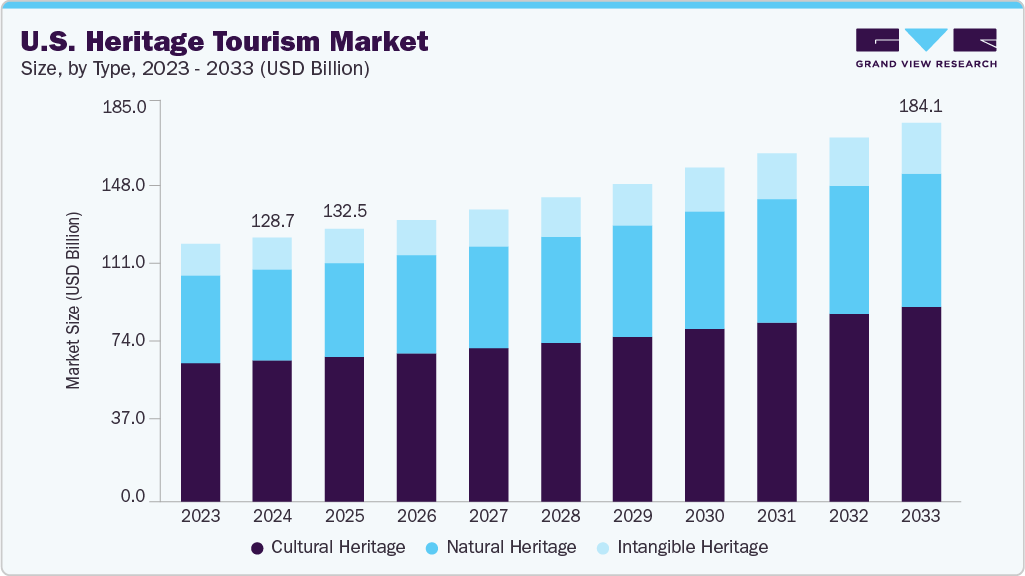
The U.S. heritage tourism market size was estimated at USD 128.66 billion in 2024 and is projected to grow at a CAGR of 4.2% from 2025 to 2033. Contemporary travelers, particularly millennials and Gen Z consumers, are increasingly drawn to heritage tourism experiences that offer authentic cultural engagement, historical storytelling, and localized exploration. Instead of passive sightseeing, these travelers seek immersive activities such as guided walking tours, artisan workshops, and culinary experiences that connect them to the history of that place. This trend is driving visitation to lesser-known heritage sites in rural towns and historically underserved communities. Moreover, the growing emphasis on purpose-driven travel has made visitors more inclined to support destinations that prioritize preservation, inclusivity, and community benefit.

In 2024, U.S. travel agencies and experiential‑tourism platforms observed a strong surge in traveler demand for immersive, culturally rich vacations. For instance, GetYourGuide reported that U.S. spending on in‑destination experiences had surged nearly 32% above pre‑pandemic levels by August 2024, compared to only a modest increase in traditional discretionary purchases. At the same time, Arival and Skyscanner data often shared via travel‑agent channels indicated that U.S. tourists averaged nearly five on‑site tours per trip in 2023, compared to about 2.7 in 2019. These shifts underscore that travelers are planning trips around active engagement, such as cooking workshops, private heritage tours, and craft lessons, rather than mere sightseeing.
Moreover, travel industry observations show a rise in curated, heritage-focused domestic itineraries. Programs spotlighting historic districts, Native American heritage, civil rights trails, and multicultural festivals have attracted increasing interest. For instance, digital detox retreats designed around immersive stays in national parks without Wi‑Fi or cell service have grown in popularity, reflecting a deeper desire for historical and cultural immersion.
In urban centers, heritage tourism is also evolving. Cities such as Washington, D.C., New Orleans, and Boston have seen tourism strategies reframing landmarks as centers for cultural discovery. Tour planners now include live jazz, civil rights narratives, Creole and colonial cuisine experiences, and hands-on art workshops within trip packages. This trend aligns with the broader domestic travel spike in the 2024 holiday season, nearly 119 million Americans traveled 50+ miles, the highest post-2019 levels.
Furthermore, federal and state governments have strategically stepped up preservation and restoration work to support heritage tourism, recognizing that well-maintained sites attract visitors and boost local economies. A key example is the Great American Outdoors Act, which established the Legacy Restoration Fund. Between 2021 and 2025, this program has allocated up to USD 1.3 billion annually for park infrastructure projects, fueling over 250 completed projects and hundreds underway across the country. Beyond improving scenic trails and historic structures, this investment has sustained 17,000 jobs and generated an estimated $1.8 billion annually in local economic activity.
The National Park Service (NPS), one of the primary recipients, has directed these funds toward a wide range of heritage-focused restoration projects. In fiscal year 2025 alone, significant allocations were made, including USD 31 million for buildings at Gettysburg National Military Park and USD 9 million to preserve historic mills in Rhode Island’s Blackstone River Valley. Innovative projects like the Mammoth Cave Heritage Trail rehabilitation exemplify this shift: the boardwalk has been upgraded for accessibility and enhanced visitor experience, transforming it into a living classroom. These improvements not only protect cultural assets but also enhance the appeal and quality of visitor engagement.
In addition, digital innovation is revolutionizing U.S. heritage tourism by enhancing how visitors experience and learn about cultural sites. Recent initiatives by federal and state agencies, alongside leading institutions like the Smithsonian, are leveraging technologies, including augmented reality (AR), QR-coded storytelling, and virtual platforms, to create accessible, immersive, and deeply engaging experiences.
In California, the State Parks Department introduced the Virtual Adventurer mobile app in 2023, bringing AR and VR to nine historic sites, including Bodie State Historic Park and Old Town San Diego. Users can tap into holographic reconstructions, immersive 3D storytelling, and audio narratives, such as visualizing 19th-century Chinatown or historical figures on-site. The app also prioritizes accessibility, offering dyslexic fonts, audio captions, and high-contrast visuals, ensuring that digital enhancements serve diverse audiences.
Consumer Insights
The market is witnessing strong growth, with Baby Boomers and Millennials emerging as key demographic drivers. According to Skift, Millennials are 13% more likely to visit destinations with cultural or historical significance than the general population. This generation shows a marked preference for immersive travel experiences, seeking to connect with local traditions, history, and identity. Their interest often goes beyond conventional sightseeing, leaning toward meaningful exploration that includes activities such as visiting museums, historical landmarks, and even ancestral locations. This generational shift is reshaping the heritage tourism landscape, as younger travelers demand authenticity, storytelling, and engagement with communities.
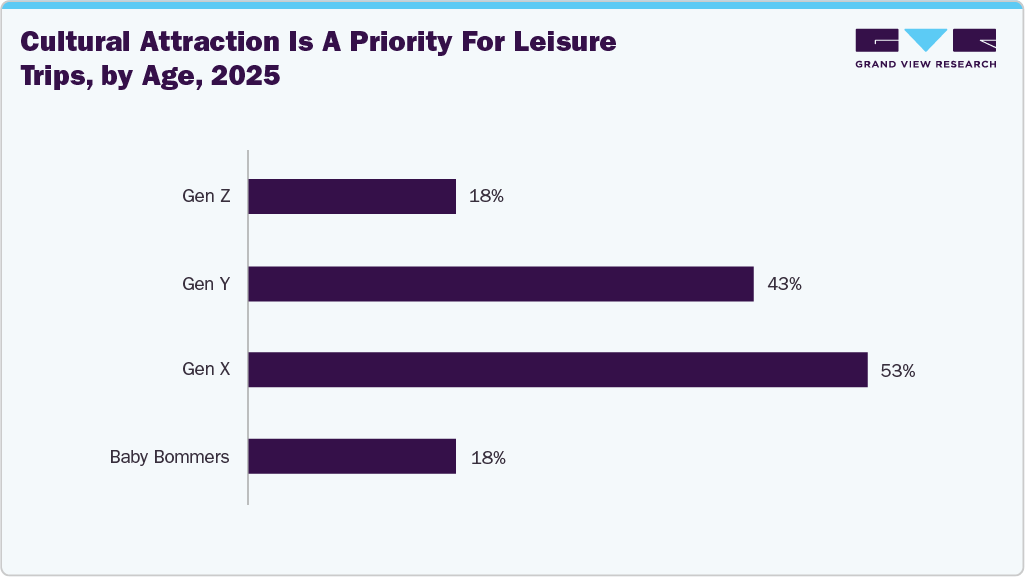
Although travelers aged 51 to 70 still account for the majority of the heritage tourism demand, Millennials and those aged 31 to 50 are quickly narrowing the gap, driven by their increasing travel frequency and evolving values around cultural awareness. Millennials are also more inclined to blend leisure with learning, often integrating historical insights or indigenous experiences into their itineraries. For instance, a recent study published by MDPI showed that 82% of Millennials are interested in Native American culture, with nearly a third having already visited tribal areas, underlining their thirst for experiential and educational travel.
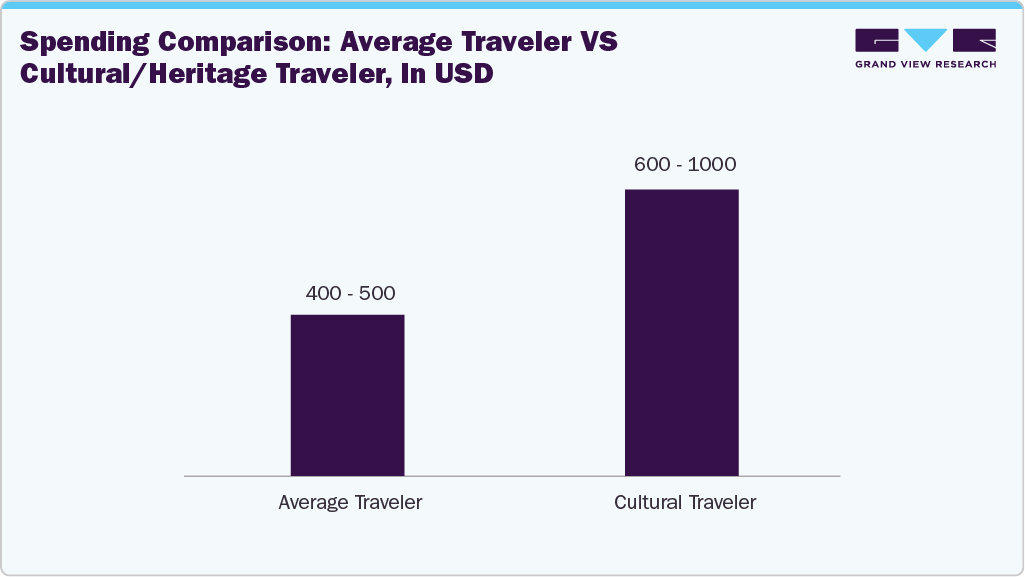
According to the U.S. Cultural & Heritage Tourism Marketing Council, 78% of U.S. leisure travelers engage in cultural or heritage activities, spending an average of USD 994 per trip. In comparison, general travelers spend around USD 457, as highlighted in the data from Expedia Group. This indicates that travelers drawn to cultural and historical experiences are willing to allocate nearly double the budget of an average traveler. Moreover, 19% of cultural travelers spend over USD 1,000 on a trip, compared to just 12% of the general traveling population, highlighting a strong correlation between income level and interest in heritage-focused travel. The higher spending is also evident in other travel behaviors. Cultural travelers tend to take longer trips, averaging 5.2 days versus 3.4 days for typical travelers, which is an indicator of greater financial investment in the travel experience.
Type Insights
Cultural heritage tourism accounted for a revenue share of 53.43% in the year 2024. A renewed emphasis on domestic travel and a rising awareness of national identity among younger generations has primarily driven the growth of cultural heritage tourism in the U.S. According to the U.S. Travel Association, over 76% of all leisure travelers in the U.S. engage in cultural or historical activities during their trips. These travelers spend 60 percent more money on average than other leisure travelers.
Intangible heritage tourism is projected to grow at a CAGR of 5.2% over the forecast period. The expansion of intangible heritage tourism has been influenced by growing interest in local cultures, indigenous traditions, and community-centered events. Events like the New Orleans Mardi Gras and various Native American powwows have become key tourist attractions, drawing millions annually. The National Assembly of State Arts Agencies reported a 12% increase in attendance at cultural festivals and folk art events between 2021 and 2023.
Age Group Insights
Travelers between the age group 51-70 held a revenue share of 56.01% in 2024. Consumers under these age groups are inclined towards cultural depth, historical authenticity, and meaningful educational experiences. Unlike younger travelers, they often prefer curated tours, docent-led visits, and structured itineraries that highlight architectural landmarks, museums, and historic neighborhoods. Lifelong learning goals, nostalgia, and interest in genealogy or ancestral roots influence their travel choices. The growth of heritage-based river cruises, rail journeys, and motorcoach tours caters well to their comfort preferences and mobility needs. In addition, travelers in this group favor destinations with mature infrastructure, accessible amenities, and interpretive services, making historic towns, battlefields, and national landmarks especially appealing.
The demand for heritage tours for travelers aged between 31 and 50 is expected to grow at a CAGR of 5.3% from 2025 to 2033. This age group, often comprising mid-career professionals and families, seeks meaningful and educational experiences that connect them with history, identity, and diverse traditions. Increased disposable income and a desire to explore heritage sites as part of multigenerational or educational travel also contribute to this trend. In addition, digital platforms and social media are enhancing the visibility and appeal of heritage destinations, further fueling demand.
Booking Channel Insights
The direct bookings accounted for a market share of 41.56% in 2024. Evolving visitor preferences underpin the growth, institutional efforts in site promotion, digital outreach, and heritage site management reforms. National and local heritage organizations have strengthened their online presence through official websites, educational content, and e-ticketing systems, enhancing engagement, transparency, and revenue retention. Museums, landmarks, and cultural centers have adopted user-friendly platforms and mobile apps that enable real-time scheduling, guided tour bookings, and donation options. The increasing use of smartphones, combined with a growing awareness of heritage conservation, has encouraged visitors to bypass third-party vendors and book directly through destination-managed portals.
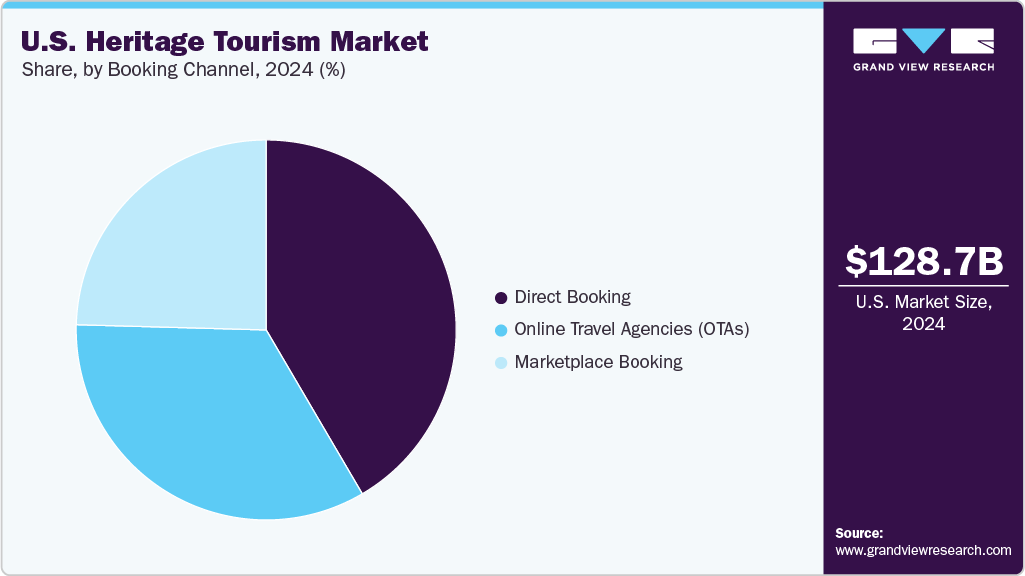
Marketplace bookings in the U.S. heritage tourism industry are expected to grow at a CAGR of 5.5% from 2025 to 2033. Online platforms offer easy access to a wide range of heritage experiences, real-time availability, and user reviews, making them attractive to tech-savvy travelers. In addition, marketplaces often provide personalized recommendations and bundled cultural experiences, enhancing their value proposition. The rise of mobile usage and trust in secure digital transactions further supports the shift toward online bookings in the heritage tourism segment.
Key U.S. Heritage Tourism Company Insights
The market thrives through a mix of established operators and emerging niche players, fostering a dynamic and evolving landscape. Key players emphasize authentic experiences, cultural preservation, and community engagement to meet the rising demand for meaningful and educational travel. Collaborations with local governments, historical societies, and cultural institutions help expand tour offerings and enhance visitor experiences. The market is also leveraging digital innovation, such as virtual guides, mobile booking platforms, and immersive storytelling, to attract tech-savvy travelers. Sustainability and inclusivity are increasingly central, with operators focusing on responsible tourism practices that benefit local communities and protect heritage sites. This strategic blend of tradition, innovation, and social awareness allows the industry to cater to a wide range of traveler preferences while aligning with broader trends in experiential and conscious travel.
Key U.S. Heritage Tourism Companies:
- Trafalgar Tours
- Tauck, Inc. (Tauck World Discovery)
- National Geographic Expeditions
- Historic Tours of America, Inc.
- G Adventures Inc.
- Intrepid Travel, Inc.
- Globus Family of Brands (including Globus and Cosmos)
- Gate 1 Travel LTD
- Mayflower Cruises & Tours
- American Classic Tours, Inc.
Recent Developments
-
In June 2025, Intrepid Travel, Inc. launched two limited-edition “Active-ism” road trips designed to support and advocate for U.S. national parks. These immersive tours, each capped at just 11 participants for an intimate experience, are co-hosted by local Intrepid guides and prominent activists. The first, a 5-day journey to Zion & the Grand Canyon, features guests like Alex Haraus (public lands advocate) and Wawa Gatheru (environmental advocate). The second, a 6-day Yellowstone & Grand Tetons expedition, includes hosts such as climate educator Michael Mezzatesta and environmental author Leah Thomas.
-
In May 2025, Riviera Travel Limited announced its expansion of a series of luxury Grand Tours specifically tailored for the U.S. market. These newly launched itineraries blend a week of European river cruising with a week of guided land exploration, offering travelers a balanced experience of both waterway serenity and immersive inland discovery. The tours span culturally rich and scenic destinations, including Italy, Switzerland, Portugal, and France, catering to the American demand for heritage, comfort, and comprehensive travel. To encourage early bookings, Riviera offered up to 40% savings for reservations made by May 31, 2025, positioning these Grand Tours as both a premium and value-driven choice for U.S. travelers seeking all-inclusive European adventures in 2026.
U.S. Heritage Tourism Market Report Scope
|
Report Attribute
|
Details
|
|
Market size value in 2025
|
USD 132.53 billion
|
|
Revenue forecast in 2030
|
USD 184.14 billion
|
|
Growth rate
|
CAGR of 4.2% from 2025 to 2033
|
|
Actual data
|
2021 – 2024
|
|
Forecast period
|
2025 – 2033
|
|
Quantitative units
|
Revenue in USD billion, and CAGR from 2025 to 2033
|
|
Report coverage
|
Revenue forecast, company ranking, competitive landscape, growth factors, and trends
|
|
Segments covered
|
Type, age group, booking channel
|
|
Country scope
|
U.S.
|
|
Key companies profiled
|
Trafalgar Tours; Tauck, Inc. (Tauck World Discovery); National Geographic Expeditions; Historic Tours of America, Inc.; G Adventures Inc.; Intrepid Travel, Inc., Globus Family of Brands (including Globus and Cosmos); Gate 1 Travel LTD; Mayflower Cruises & Tours; American Classic Tours, Inc.
|
|
Customization scope
|
Free report customization (equivalent up to 8 analysts working days) with purchase. Addition or alteration to country, regional & segment scope.
|
|
Pricing and purchase options
|
Avail customized purchase options to meet your exact research needs. Explore purchase options
|
U.S. Heritage Tourism Market Report Segmentation
This report forecasts revenue growth at country levels and provides an analysis of the latest trends and opportunities in each of the sub-segments from 2021 to 2033. For this study, Grand View Research has segmented the U.S. heritage tourism market report based on type, age group, and booking channel.
-
Type Outlook (Revenue, USD Billion, 2021 – 2033)
-
Cultural Heritage
-
Natural Heritage
-
Intangible Heritage
-
-
Age Group Outlook (Revenue, USD Billion, 2021 – 2033)
-
30 and Under
-
31 to 50
-
51 to 70
-
71 and Above
-
-
Booking Channel Outlook (Revenue, USD Billion, 2021 – 2033)
Frequently Asked Questions About This Report
b. The U.S. heritage tourism market was estimated at USD 128.66 billion in 2024 and is expected to reach USD 132.53 billion in 2025.
b. The U.S. heritage tourism market is expected to grow at a compound annual growth rate of 4.2% from 2025 to 2030 to reach USD 184.14 million by 2033.
b. Cultural heritage tourism accounted for a revenue share of 53.43% in the year 2024. This was driven by increased public interest in exploring historic sites, cultural landmarks, and traditional practices. The segment’s growth also reflects broader trends in experiential travel and educational tourism.
b. Some of the key players operating in the U.S. heritage tourism market include Trafalgar Tours, Tauck, Inc. (Tauck World Discovery), National Geographic Expeditions, Historic Tours of America, Inc., G Adventures In., Intrepid Travel, Inc., Globus Family of Brands (including Globus and Cosmos), Gate 1 Travel LTD, Mayflower Cruises & Tours, American Classic Tours, Inc.
b. Growth of the U.S. heritage tourism market is primarily driven by increasing demand for meaningful and educational travel experiences that connect visitors with history and culture. Efforts to preserve and promote historic sites, along with sustainable tourism initiatives, have also contributed to this rise.
link