


Saudi Arabia Heritage Tourism Market Summary
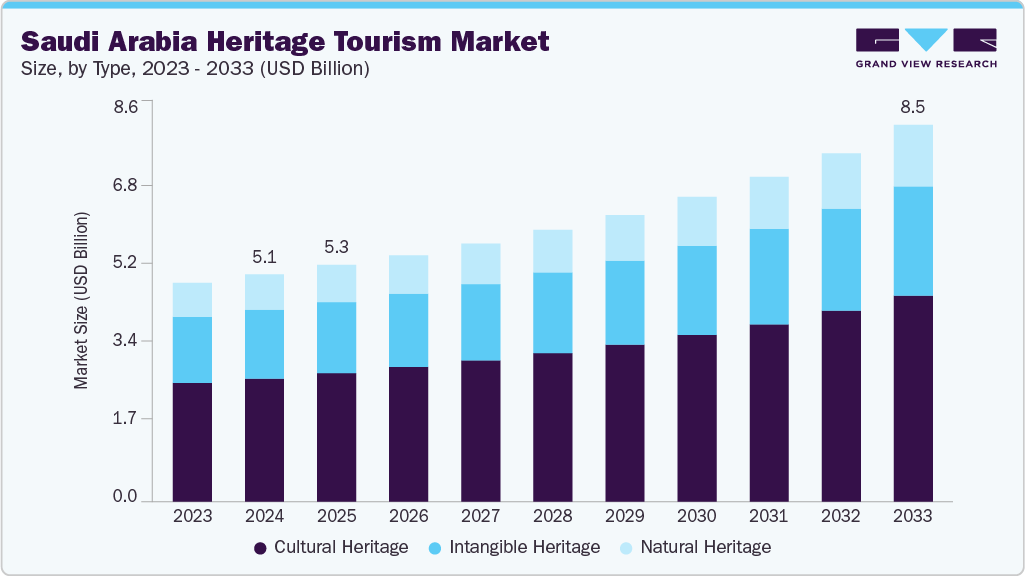
The Saudi Arabia heritage tourism market size was estimated at USD 5,118.3 million in 2024 and is projected to reach USD 8,483.7 million by 2033, growing at a CAGR of 6.0% from 2025 to 2033, driven by large-scale investments under the Kingdom’s Vision 2030 framework. The government has allocated over USD 1 trillion to diversify its economy, with tourism and cultural heritage as critical pillars. Initiatives such as the development of AlUla, Diriyah Gate, and the restoration of Al-Balad in Jeddah reflect a deep commitment to preserving and showcasing the country’s rich historical legacy. These projects not only conserve heritage assets but also aim to position them as global tourism destinations.

Infrastructure developments, including airport expansions, hotel chains, and cultural centers, are being rapidly executed to accommodate the increasing tourist influx. Furthermore, the integration of digital technologies such as AI and augmented reality is enhancing the visitor experience by making historical narratives more immersive and interactive.
Cultural events and festivals are also playing a major role in revitalizing the heritage tourism landscape. Events such as Winter at Tantora in AlUla, Jenadriyah Festival, and the Islamic Arts Biennale are transforming historic sites into dynamic cultural platforms. These events attract both domestic and international audiences, boosting local economies and encouraging community participation. Simultaneously, heritage districts such as Jeddah’s Al-Balad are being revitalized through restoration of old buildings, improved lighting and infrastructure, and support for traditional businesses. The blending of historical preservation with contemporary cultural expression is creating an appealing narrative for tourists who seek authenticity and cultural depth in their travel experiences.
Tourist preferences in Saudi Arabia are also evolving in line with global travel trends, with a growing inclination towards sustainable and experiential tourism. Many heritage destinations are being designed with sustainability at their core, incorporating eco-friendly infrastructure and conservation-focused visitor management. Projects such as AlUla emphasize environmental stewardship and responsible tourism, aligning with traveler demand for low-impact and meaningful travel. In addition, the rise in domestic travel and interest in heritage-based vacations, including adventure tourism activities such as desert hiking and cultural camping, is creating a new class of heritage explorers who value tradition combined with discovery.
Overall, Saudi Arabia’s heritage tourism market is gaining strong momentum through a combination of policy-driven development, cultural revival, and alignment with sustainable tourism trends. The strategic focus on promoting local identity while embracing international tourism standards is helping the Kingdom position itself as a unique heritage destination on the global map. With ongoing investments, technological integration, and efforts to nurture local communities, the heritage tourism sector is set to play a vital role in the country’s socio-economic transformation.
Consumer Survey & Insights
The heritage tourism market in Saudi Arabia is undergoing a significant transformation fueled by the country’s swift integration into the global tourism landscape. As destinations such as Jeddah began welcoming visitors from around the world, tourism management models were quickly adapted to cater to evolving consumer expectations in a highly competitive global environment. The cultural heritage of Saudi Arabia, once primarily viewed through a domestic lens, is now marketed and experienced as an international asset. This shift has elevated the profile of heritage sites, drawing in travelers interested in authentic cultural experiences, history, and the memory embedded within historic landscapes and architecture.
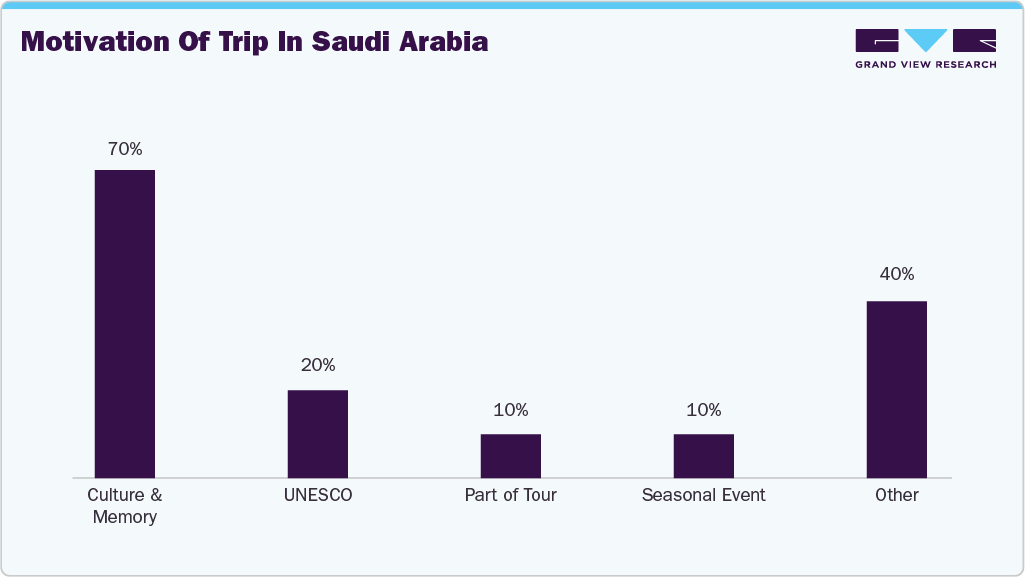
Jeddah stands out as a key example of shifting consumer behavior in heritage tourism. Since 2019, its historic old city, recognized as one of Saudi Arabia’s six UNESCO World Heritage Sites has emerged as a central hub for cultural tourism. Consumer interest in this area is largely driven by the uniqueness and authenticity of the historic environment rather than typical leisure-based motivations. Tourists visiting Historic Jeddah are more inclined to explore the architectural symbolism and cultural significance of the site, rather than attend events or seek entertainment. This illustrates a trend where heritage travelers are seeking depth, meaning, and connection to place key factors that influence travel decisions in this segment.
Moreover, visitors are increasingly aware of sustainability issues and expect tourism to be managed responsibly. As a result, heritage tourists in Saudi Arabia value not just the experience of visiting historic sites, but also the efforts made to protect and preserve these sites for future generations. The architectural heritage, particularly pre-oil era structures, has become a focal point for cultural identity and national pride, which consumers are keen to experience authentically.
The motivations driving heritage tourism in Saudi Arabia are rooted in cultural appreciation, historical curiosity, and a growing global trend of responsible travel. Tourists are not merely passive observers but are increasingly seeking enriching, educational, and sustainable encounters with Saudi Arabia’s evolving cultural narrative. This necessitates a careful balance between visitor engagement and heritage protection, a challenge that both public and private stakeholders are now addressing through adaptive tourism strategies.
Type Insights
Culture heritage tourism market in Saudi Arabia accounted for a share of 54.37% in the overall Saudi Arabia heritage tourism industry in 2024 driven by strategic reforms under Vision 2030 aimed at diversifying the economy and promoting non-oil sectors such as tourism. This segment emphasizes the preservation and promotion of historical landmarks, traditional arts, architecture, and ancient cities such as AlUla, Diriyah, and Jeddah’s Al-Balad, many of which are UNESCO World Heritage Sites. The government’s large-scale investments in site restoration, infrastructure development, and international marketing campaigns have enhanced global visibility. Initiatives such as Saudi Seasons and cultural festivals have further enriched the tourist experience. In addition, simplified visa procedures, increased international flights, and public-private partnerships have made cultural heritage more accessible, fostering greater domestic and international interest in Saudi Arabia’s rich historical and cultural assets.
The natural heritage tourism market in Saudi Arabia is expected to grow at a CAGR of 6.4% from 2025 to 2033, due to the country’s focus on leveraging its diverse natural landscapes-such as deserts, mountains, coastal zones, and protected reserves-to attract eco-conscious and adventure-seeking travelers. Government initiatives under Vision 2030, including the development of giga-projects such as NEOM and The Red Sea Project, emphasize sustainable tourism and nature conservation. These projects aim to balance environmental preservation with tourism development. Enhanced infrastructure, adventure tourism offerings such as hiking and diving, and improved accessibility are also drawing interest, positioning Saudi Arabia as a rising destination for nature-based tourism experiences.
Age Group Insights
Travelers in the 51-70 age group accounted for 57.89% of the overall Saudi Arabia heritage tourism industry in 2024, highlighting a strong preference for culturally enriching and historically significant travel experiences within this demographic. This age group, often comprising financially stable, time-rich retirees and pre-retirees, prioritizes meaningful and educational travel over mass-market tourism. Key drivers include a deep appreciation for history, architecture, and traditional arts and a desire for nostalgic or spiritual experiences such as temple visits, onsen stays, and cultural festivals.
Travelers in the 31-50 age group in the heritage tourism industry in Saudi Arabia are expected to grow at a CAGR of 6.5% from 2025 to 2033. Driven by a rising preference for culturally rich, experience-based travel among mid-career professionals and young families. This demographic seeks a balance between leisure and learning, with a growing interest in authentic experiences that offer deeper engagement with the country’s historical, spiritual, and architectural heritage. Drivers include higher disposable income, flexible travel preferences, and a strong desire for educational and meaningful vacations that align with personal values and family enrichment.
Booking Mode Insights
Booking through offline mode generated a revenue share of 68.87% in 2024 in the overall Saudi Arabia heritage tourism industry. Indicating a strong consumer preference for personalized, trust-based travel planning when engaging with culturally significant experiences, especially prevalent among older travelers, group tour participants, and international visitors who seek the expertise, assurance, and tailored service that offline agents, tour operators, and travel consultants. Heritage tourism often involves multi-day itineraries, remote destinations, and immersive cultural experiences, which require in-depth planning and local insights, services that offline booking platforms are better equipped to offer.
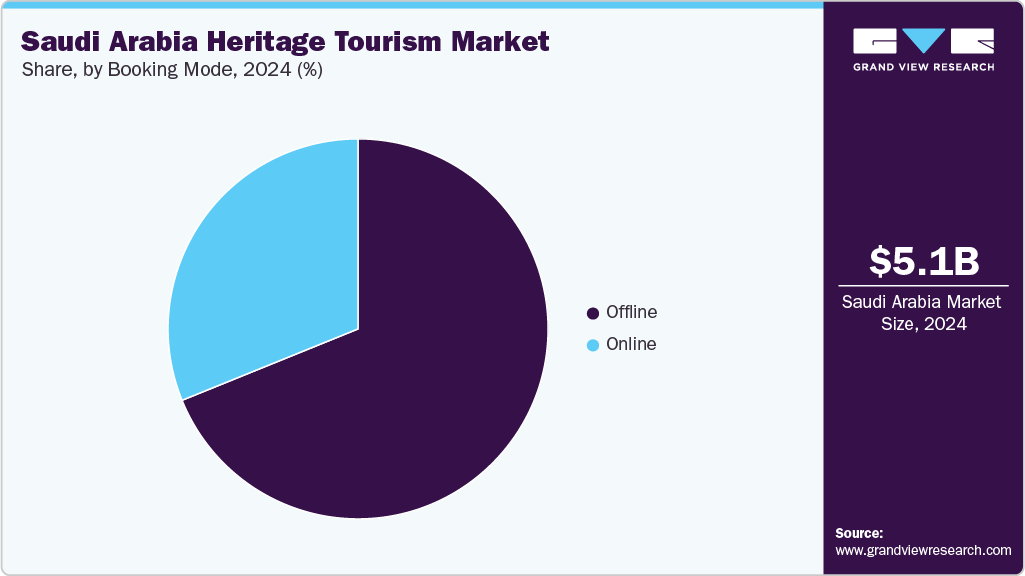
Booking through online mode is expected to grow at a CAGR of 6.4% from 2025 to 2033, the shift is driven by the increasing digital adoption among younger travelers and tech-savvy international tourists. It is fueled by the demand for convenience, real-time access to travel options, and personalized itinerary planning. Online platforms offer flexibility, price comparison, user-generated reviews, and multimedia content that help travelers make informed decisions when exploring heritage destinations across Saudi Arabia.
Key Saudi Arabia Heritage Tourism Company Insights
Saudi Arabia heritage tourism market is fragmented primarily due to the presence of several globally recognized players as well as regional players. Some prominent companies in the Saudi Arabia heritage tourism industry are Seera Group, Almosafer, Zahid Travel, Al Faris International Travel & Tourism, Fursan Travel, Rahhalah Explorers, Awtad Travel & Tourism, Tourist Saudi, Jana Tours, Wadi Tours, and others.
-
Seera Group is one of the prominent travel and tourism companies in Saudi Arabia and the Middle East, offering integrated travel solutions across leisure, business, and religious segments. Headquartered in Riyadh, Seera operates various brands, including Discover Saudi, focusing on domestic tourism, heritage experiences, and digital travel services aligned with Saudi Arabia’s Vision 2030 tourism goals.
-
Al Faris International Travel & Tourism is a prominent Saudi IATA‑accredited travel management company established in 1989, delivering customized travel solutions for leisure, business, medical trips, and education abroad. With over 3,000 clients, including corporate, governmental, and individual travelers, it offers flight and hotel bookings, visa services, and tailored tour programs. Recognized multiple times as Saudi Arabia’s top leisure travel agency by the World Travel Awards (2018, 2019), it continues expanding partnerships and service offerings across the Kingdom.
Key Saudi Arabia Heritage Tourism Companies:
- Seera Group
- Almosafer
- Zahid Travel
- Al Faris International Travel & Tourism
- Fursan Travel
- Rahhalah Explorers
- Awtad Travel & Tourism
- Tourist Saudi
- Jana Tours
- Wadi Tours
Recent Developments
-
In April 2025, Almosafer, travel company in Saudi Arabia, entered into a strategic partnership with Wyndham Hotels & Resorts during the Arabian Travel Market (ATM) 2025. This collaboration significantly expands Almosafer’s global hotel offerings, granting travelers access to over 9,300 Wyndham properties across 95 countries. The alliance supports Almosafer’s goal of enriching travel experiences while aligning with Vision 2030 to establish Saudi Arabia as a top-tier global tourism destination.
-
In November 2024, Diriyah Company signed five major travel trade agreements at WTM London with partners including Almosafer, Tetrapylon DMC, and Abercrombie & Kent to boost Diriyah’s global tourism appeal. The collaborations aim to position Diriyah as a top-tier cultural destination through joint marketing, tourism reports, and destination toolkits, aligning with its transformation into a world-class heritage and hospitality hub.
Saudi Arabia Heritage Tourism Market Report Scope
|
Report Attribute
|
Details
|
|
Market revenue in 2025
|
USD 5,325.5 million
|
|
Revenue forecast in 2033
|
USD 8,483.7 million
|
|
Growth rate (Revenue)
|
CAGR of 6.0% from 2025 to 2033
|
|
Actuals
|
2021 – 2024
|
|
Forecast period
|
2025 – 2033
|
|
Quantitative units
|
Revenue in USD million and CAGR from 2025 to 2033
|
|
Report coverage
|
Revenue forecast, company ranking, competitive landscape, growth factors, and trends
|
|
Segments covered
|
Type, age group, and booking mode
|
|
Country scope
|
Saudi Arabia
|
|
Key companies profiled
|
Seera Group; Almosafer, Zahid Travel; Al Faris International Travel & Tourism; Fursan Travel; Rahhalah Explorers; Awtad Travel & Tourism; Tourist Saudi; Jana Tours; Wadi Tours
|
|
Customization
|
Free report customization (equivalent up to 8 analysts working days) with purchase. Addition or alteration to country, regional & segment scope
|
|
Pricing and purchase options
|
Avail customized purchase options to meet your exact research needs. Explore purchase options |
Saudi Arabia Heritage Tourism Market Report Segmentation
This report forecasts revenue growth at the country level and provides an analysis of the latest industry trends and opportunities in each of the sub-segments from 2021 to 2033. For the purpose of this study, Grand View Research has segmented the Saudi Arabia heritage tourism market based on type, age group, and booking mode:
-
Type Outlook (Revenue, USD Million, 2021 – 2033)
-
Cultural Heritage
-
Natural Heritage
-
Intangible Heritage
-
-
Age Group Outlook (Revenue, USD Million, 2021 – 2033)
-
30 and Under
-
31-50
-
51-70
-
70 and Above
-
-
Booking Mode Outlook (Revenue, USD Million, 2021 – 2033)
Frequently Asked Questions About This Report
b. The Saudi Arabia heritage tourism market was estimated at USD 5118.3 million in 2024 and is expected to reach USD 5,325.5 million in 2025.
b. The Saudi Arabia heritage tourism market is expected to grow at a compound annual growth rate of 6.0% from 2025 to 2030 to reach USD 8,483.7 million by 2033.
b. Cultural heritage tourism accounted for a revenue share of 54.37% in the year 2024. This was driven by increased public interest in exploring historic sites, cultural landmarks, and traditional practices. The segment’s growth also reflects broader trends in experiential travel and educational tourism.
b. Some of the key players operating in the Saudi Arabia heritage tourism market include Seera Group; Almosafer, Zahid Travel; Al Faris International Travel & Tourism; Fursan Travel; Rahhalah Explorers; Awtad Travel & Tourism; Tourist Saudi; Jana Tours; Wadi Tours
b. Growth of the Saudi Arabia heritage tourism market is primarily driven by increasing demand for meaningful and educational travel experiences that connect visitors with history and culture. Efforts to preserve and promote historic sites, along with sustainable tourism initiatives, have also contributed to this rise.
link