



Africa Travel Market Size
The Africa travel market was valued at USD 24.50 billion in 2024. The market is projected to grow from USD 25.73 billion in 2025 to reach USD 38.01 billion by 2033, exhibiting a CAGR of 5% from 2025 to 2033.
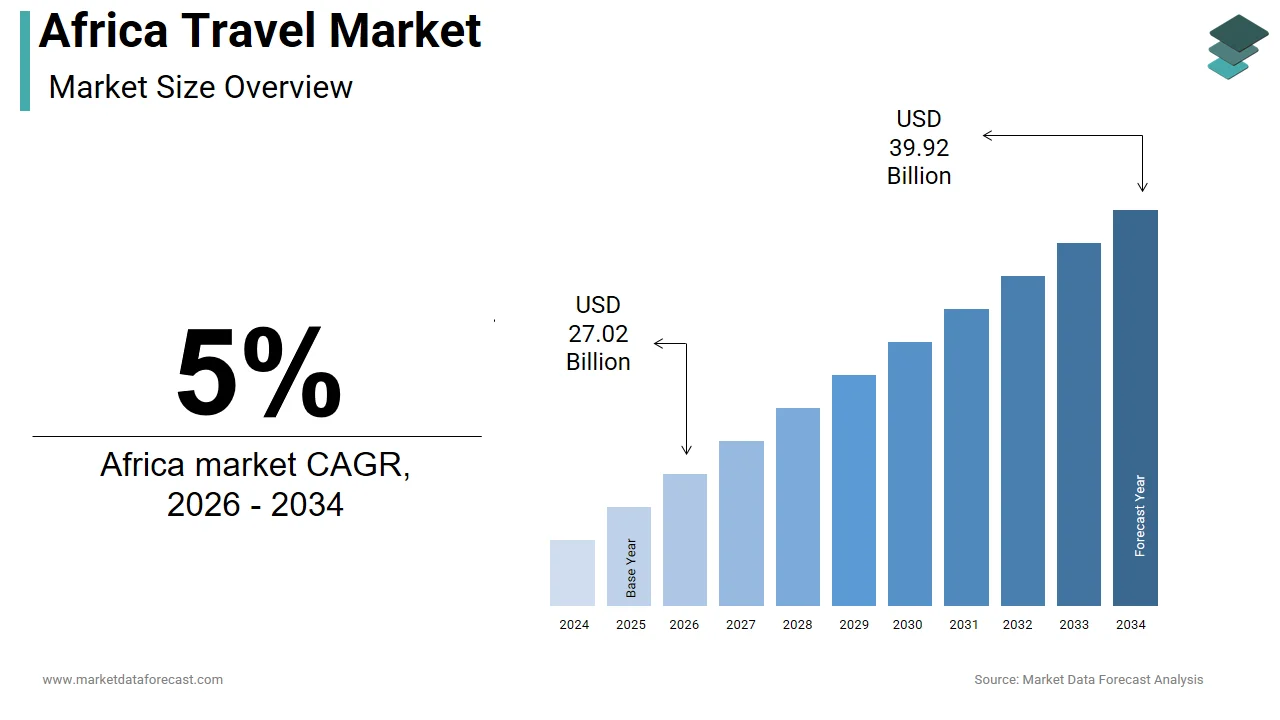

Travel is a tourism-related activity, which includes leisure travel, business tourism, adventure tourism, cultural and heritage tours, as well as religious and MICE (Meetings, Incentives, Conferences, Exhibitions) travel. According to the World Travel & Tourism Council (WTTC), travel and Customised holidays contributed over 8% of Africa’s total GDP in 2023, with employment in the sector surpassing 24 million jobs across hotels, airlines, tour operators, and transport services. Africa’s travel market has recovered from the pandemic due to renewed international air connectivity, easing visa regulations, and targeted marketing campaigns aimed at attracting global travelers. As per the United Nations World Tourism Organization (UNWTO), international tourist arrivals to Africa increased by 21% in 2023 compared to the previous year, which shows a strong recovery trajectory. Moreover, there is a rising trend toward domestic and regional tourism, especially among the expanding African middle class. Countries like Ghana, Nigeria, and Uganda have introduced e-visa systems and improved airport facilities to enhance the traveler experience and streamline entry procedures.
MARKET DRIVERS
Increasing International Air Connectivity and Improved Infrastructure
The growth of international air routes and advancements in transportation infrastructure are greatly influencing the growth of the Africa travel market. According to the International Air Transport Association (IATA), the number of direct flights between African countries and major global hubs increased by 28% in 2023, which enhances accessibility for international tourists. Airlines such as Ethiopian Airlines, Kenya Airways, and South African Airways have expanded their fleets and route networks, while low-cost carriers like Fastjet and FlySafair are making domestic and regional travel more affordable. These developments have significantly reduced travel time and costs, which encourages both leisure and business travelers to visit the continent. Additionally, governments are investing in airport modernization projects to accommodate higher passenger volumes. For example, according to the Egyptian Ministry of Civil Aviation, Cairo International Airport’s terminal upgrade’s first phase was finished in 2023, which raised capacity by 30%. Improved road networks, rail connectivity, and intercity transport options are also enhancing intra-African mobility. These infrastructure advancements make it easier for tourists to explore multiple destinations within the continent, thereby driving demand and contributing to the overall growth of the Africa travel market.
Rising Middle Class and Domestic Tourism Demand
The rapid growth of Africa’s middle class is playing a pivotal role in stimulating domestic tourism is enhancing the growth of the Africa travel market. According to the African Development Bank, the continent’s middle class grew from 355 million in 2010 to an estimated 460 million in 2023, which represents over a third of Africa’s population. Due to this population change, people have more money to spend on leisure pursuits like safari vacations, cultural events, and weekend excursions. In countries like Nigeria, Kenya, and Ghana, domestic travel has surged due to improved hotel availability, better road conditions, and enhanced mobile-based booking platforms. Furthermore, local governments and private sector players have launched promotional campaigns targeting domestic travelers. For instance, according to South African Tourism, the country’s “Rediscover SA” campaign encouraged citizens to visit national parks and historical sites, which led to a significant increase in internal tourism activity in 2023. Digital payment adoption and fintech-enabled travel platforms have further facilitated spontaneous travel planning, which allows consumers to book accommodations, transportation, and activities seamlessly.
MARKET RESTRAINTS
Political Instability and Security Concerns
Political instability and security issues is limiting the growth of the Africa travel market, which discourages potential visitors and limits tourism inflows in several regions. According to the Economist Intelligence Unit’s 2023 Democracy Index, nearly one-third of African countries were classified as authoritarian regimes, where abrupt policy changes, civil unrest, and governance uncertainty can undermine traveler confidence. Western governments issued travel recommendations in 2023 due to increased political tensions and armed struggle in countries including Sudan, Mali, Burkina Faso, and portions of the Democratic Republic of the Congo. As reported by the UK Foreign Office, over 15 African nations received updated travel warnings in 2023, which suggest caution or outright avoidance based on prevailing safety concerns.
Complex Visa Regimes and Bureaucratic Entry Procedures
Visa restrictions and cumbersome entry requirements is restricting the growth of the Africa travel market. According to the African Union, as of 2023, only 32 out of 55 African countries had fully implemented visa-on-arrival policies, and even fewer offered e-visas with streamlined application processes. Many African nations require foreign nationals to obtain visas in advance through embassies or consulates, which often involves lengthy processing times and high fees. For example, according to the Nigerian Immigration Service, in 2023, applicants for a tourist visa to Nigeria had to submit a lot of documentation and undergo biometric verification. These bureaucratic hurdles reduce the spontaneity of travel and discourage short-term visits, particularly from emerging markets in Asia and Latin America. The absence of regional harmonization still makes cross-border travel difficult, even if several nations, such as Rwanda, Mauritius, and Seychelles, grant visa-free entry to the majority of nationalities.
MARKET OPPORTUNITIES
Growth of Sustainable and Community-Based Tourism
The growing acceptance of community-based and sustainable tourism models presents an opportunity possibilities in the growth of the African travel market. According to the United Nations World Tourism Organization (UNWTO), travelers from North America and Europe showed a 34% increase in preference for eco-conscious travel experiences in 2023, which makes sustainability a key decision factor for outbound tourism. Several African countries are capitalizing on this trend by promoting conservation-focused safaris, wildlife sanctuaries, and rural homestay programs that benefit local communities. In Kenya, for instance, the Maasai-owned conservancies around the Mara ecosystem have become major attractions, which offer tourists immersive cultural experiences while generating income for indigenous populations. Similarly, Rwanda has positioned itself as a leader in responsible tourism through its gorilla conservation initiatives, which not only protect endangered species but also provide revenue-sharing mechanisms for surrounding villages. As per the Rwanda Development Board, over 70% of tourism revenue is reinvested into local development projects, which promotes the appeal of ethical travel. Africa is at the forefront of this transforming travel market due to its natural landscapes and cultural variety, which provide long-term prospects for inclusive and ecologically conscientious growth as global awareness of climate change and ethical tourism grows.
Expansion of Digital Platforms and Online Travel Booking Systems
Digital transformation is opening new avenues for growth in the Africa travel market, particularly through online platforms that facilitate bookings, payments, and itinerary planning. According to Disrupt Africa, online travel agencies (OTAs) and mobile-first travel apps in Nigeria and Kenya experienced a 39% surge in user engagement in 2023, which reflects growing consumer confidence in digital solutions. Startups such as Travelstart (South Africa), Jumia Travel (Nigeria), and Safaribookings.com (Kenya) have introduced transparent pricing, real-time availability, and secure payment gateways, which make it easier for both domestic and international travelers to plan trips without relying solely on traditional agents. Moreover, partnerships between fintech companies and travel providers have enabled installment-based booking models, which improve affordability for budget-conscious travelers. Mobile money integration has further expanded access, particularly in rural areas where credit card penetration remains low. Digital travel platforms are anticipated to be crucial in determining the future progress of the African travel market as smartphone use and internet access increase throughout the continent.
MARKET CHALLENGES
Fragmented Regional Policies and Lack of Harmonization
The lack of standardized regional policies regarding visa issuance, border controls, and tourism promotion is a barrier to the growth of the Africa travel market. According to the African Union, as of 2023, only 12 African countries had fully aligned their visa and border management frameworks under the African Continental Free Trade Area (AfCFTA) guidelines. This inconsistency results in varying visa rules, quarantine protocols, and customs procedures that complicate multi-country travel. For example, Travelers from East African nations still have to deal with complicated entrance restrictions while visiting West Africa, even though residents of ECOWAS member states are free to roam over the continent. Furthermore, pricing discrepancies and inefficiencies resulting from different taxation regimes on tourism-related services, including hotel stays, guided tours, and airline tickets, impede international travel. The absence of a unified digital passport system or common visa platform further exacerbates these barriers.
Underdeveloped Ancillary Services and Tourist Infrastructure
Large number of destinations suffer from inadequate ancillary services and outdated tourist infrastructure, which affects visitor satisfaction and return rates. Poor road conditions, inconsistent electricity supply, and limited digital connectivity in remote yet scenic locations also constrain the growth of niche tourism sectors such as ecotourism and luxury retreats. In countries like Ethiopia and Malawi, travelers often encounter outdated signage, unreliable transport links, and minimal multilingual support, diminishing overall convenience. Additionally, the quality of services and global competitiveness are impacted by the shortage of qualified tourist experts, such as guides and hospitality workers. In response, several countries have launched tourism training programs, but progress remains uneven across the continent. In the absence of significant investments in infrastructure, hospitality education, and technology-enabled service delivery, Africa would find it difficult to hold onto its standing as a top vacation destination for discriminating tourists looking for real and high-end experiences.
REPORT COVERAGE
|
REPORT METRIC |
DETAILS |
|
Market Size Available |
2024 to 2033 |
|
Base Year |
2024 |
|
Forecast Period |
2025 to 2033 |
|
Segments Covered |
By Sector, Type, Tour Type, and Region. |
|
Various Analyses Covered |
Global, Regional and Country-Level Analysis, Segment-Level Analysis, Drivers, Restraints, Opportunities, Challenges; PESTLE Analysis; Porter’s Five Forces Analysis, Competitive Landscape, Analyst Overview of Investment Opportunities |
|
Countries Covered |
Sudan, Egypt, Kenya, Ethiopia, Ghana, South Africa, Rest of Africa |
|
Market Leaders Profiled |
Accor S.A., American Express Global Business Travel (GBT), Balkan Holidays Ltd., BCD Travel Services BV, Booking Holdings Inc., Carlson Inc., Corporate Travel Management Ltd., Expedia Group Inc., Fareportal Inc., Flight Centre Travel Group Ltd., G Adventures, JPMorgan Chase & Co., JTB Corp., MakeMyTrip Ltd., Marriott International Inc., Omega World Travel Inc., PT Global Digital Niaga, Traveloka, The Scott Travel Group Ltd., Travel Leaders Group Holdings LLC, World Travel Holdings, and World Travel Inc. |
SEGMENTAL ANALYSIS
By Sector Insights
The transportation segment dominated the Africa Travel Market by capturing 42.3% of the share in 2024 due to the high cost and complexity of intercontinental and intra-African travel logistics. Airlines like Ethiopian Airlines, Kenya Airways, and South African Airways are expanding direct flights from major global hubs to African locations, which is one of the main factors contributing to this segment’s leading position. Additionally, ground transport demand has surged due to improved road infrastructure and rising domestic tourism. Moreover, the growth of ride-hailing platforms like Uber and Bolt in urban centers has made last-mile transportation more efficient and accessible.
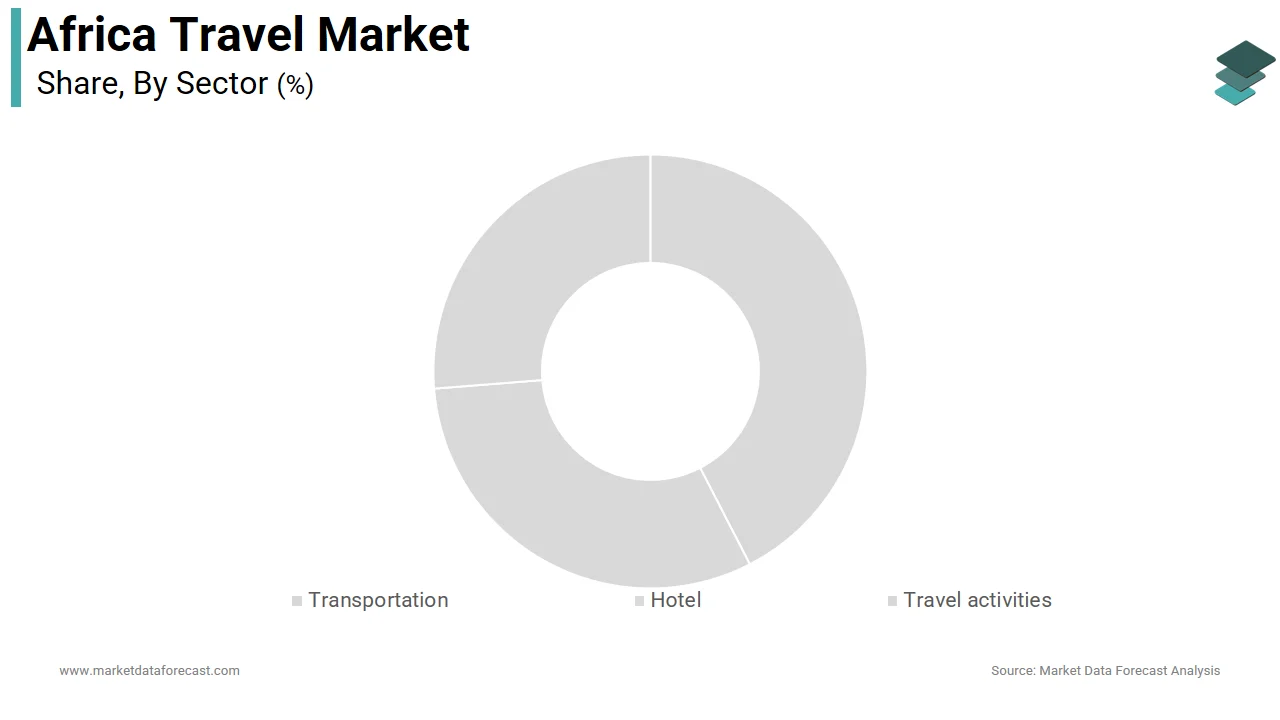
The travel activities segment is likely to experience a CAGR of 10.6% in the coming years. The increasing demand for wildlife safaris, history tours, and conservation-based tourism, especially in East and Southern Africa, is a major development driver. According to the United Nations World Tourism Organization (UNWTO), eco-tourism bookings in Kenya and Tanzania grew by over 35% in 2023, which was driven by global interest in ethical and sustainable travel. Furthermore, increased participation in adventure tourism such as mountain climbing, diving, and desert excursions is fueling demand for curated activity packages. According to the Moroccan Ministry of Tourism, bookings for guided Sahara expeditions and Atlas Mountain climbs increased by 20% in 2023. Additionally, digital booking platforms have streamlined access to travel experiences, which allows visitors to customize itineraries and make instant reservations. Startups that provide specialized tour alternatives across several African destinations, such as BookMyAdventure and Exploria, have benefited from this development.
By Type Insights
The leisure travel segment dominated the Africa travel market by capturing a major share in 2024. The rich natural landscapes, historical landmarks, and cultural variety of the continent, which draw millions of domestic and foreign tourists each year, are the driving factors of this segment’s strength. Growing middle class and discretionary money, especially in metropolitan areas of West and East Africa, is one of the main factors. Additionally, digital transformation in travel planning and booking systems has enhanced accessibility for both local and international travelers. Flexible payment choices and spontaneous travel selections were made possible by the introduction of mobile-first booking models by online platforms like Travelstart and Jumia Travel. Moreover, government-led promotional campaigns aimed at attracting foreign visitors have played a role in boosting leisure travel. In recent years, huge numbers of tourists have arrived in countries like Rwanda and Ghana, which have developed focused marketing campaigns promoting their distinctive attractions, gorilla trekking, and Pan-African cultural tours.
The business travel segment is anticipated to witness a CAGR of 9.3% from 2025 to 2033 due to factors such as increased regional trade, foreign investments, and multinational corporate expansion into African markets. A revival of international conferences, exhibits, and investment summits after pandemic-related interruptions is a major development driver. According to the Meetings Africa organization, business event registrations in South Africa rose by 22% in 2023, attracting delegations from Europe, the Middle East, and Asia. Additionally, cross-border economic exchanges are being fueled by regional integration under frameworks like the AfCFTA, which means that professionals and entrepreneurs must travel often. The African Union reported that inter-African trade meetings increased by 18% in 2023, which boosts hotel stays, flight bookings, and corporate hospitality services. In addition, urbanization and financial inclusion efforts have strengthened Africa’s appeal as a destination for global investors in tech, agriculture, and renewable energy sectors.
By Tour Type Insights
The safari and adventure tourism segment led the market by occupying a share of 37.4% in 2024. Africa’s unparalleled biodiversity, national parks, and famous wildlife reserves, which attract millions of nature lovers annually, are advantageous to this market. The strong branding and widespread identification of Africa as a top safari destination are among the main factors contributing to this segment’s dominance. Countries like Kenya, Tanzania, Botswana, and South Africa have invested heavily in wildlife conservation and eco-tourism, which generates substantial returns through tourism revenue. Additionally, tour operators are providing luxury lodges, fly-in safaris, and community-based ecotourism initiatives to adapt safari experiences to changing customer expectations. These innovations enhance visitor satisfaction while supporting local economies. Moreover, strategic partnerships between governments and private conservation entities have ensured sustainable management of protected areas.
The culinary travel and shopping segment is likely to grow with a CAGR of 11.4% from 2025 to 2033 due to driving factors such as increasing interest in food culture, gastronomic festivals, and artisanal retail experiences across the continent. The growing popularity of African food on the international scene, where chefs and food influencers show regional dishes from South Africa, Ethiopia, Nigeria, and Morocco, is a major development factor. Additionally, culinary festivals and food tourism initiatives have gained traction, which attracts both international and domestic visitors. Events such as Cape Town’s Food & Wine Festival and Lagos Food & Drink Festival have become major attractions, which encourage local entrepreneurship and tourism revenue.
COUNTRY-LEVEL ANALYSIS
South Africa Travel Market Insights
South Africa was the top performer in the Africa travel market with a 25.4% share in 2024. It remains the most developed tourism hub on the continent, which offers a diverse range of attractions from world-class safaris to vibrant urban experiences in Cape Town, Johannesburg, and Durban. The nation’s well-developed infrastructure, which includes modern airports, luxurious accommodation, and effective transportation systems, is one of the main drivers for market growth in the country. Additionally, government support for MICE (Meetings, Incentives, Conferences, Exhibitions) tourism has boosted business travel and event-driven visits. According to the Tourism Business Council of South Africa, the country’s government introduced several incentive programs to draw in foreign conferences, which helped to boost event-based travel by 15% in 2023. South Africa keeps up its leading position while influencing regional tourism trends and policy development through sustained investment in conservation, digital tourist platforms, and visa facilitation.
Egypt Travel Market Insights
Egypt was positioned second by holding 16.5% of Africa travel market share in 2024. Egypt’s ancient monuments, Red Sea resorts, and advantageous location between Africa and the Middle East make it a historical and cultural hub. According to the Egyptian Ministry of Tourism, the resurgence of international travel after political and economic stability measures is one of the primary drivers of development, as seen by the 21% rise in foreign tourists in 2023. Major archaeological discoveries, such as the Saqqara necropolis findings, further attracted global attention. Additionally, government-backed visa reforms and airport upgrades have improved traveler experience. According to the Civil Aviation Authority, Cairo International Airport increased its passenger handling capacity by 30% in early 2023 after completing phase one of its terminal upgrade. Urban tourism in cities like Luxor, Hurghada, and Sharm el-Sheik has also benefited from targeted marketing campaigns and airline route expansions, particularly from Gulf Cooperation Council (GCC) nations.
Morocco Travel Market Insights
Morocco’s travel market is growing with its cultural richness, architectural heritage, and strategic tourism policies to attract a growing influx of visitors. Expanding low-cost air connectivity, especially through Royal Air Maroc’s partnership with European carriers, is one of the primary growth drivers. According to the Moroccan Ministry of Tourism, airline seat capacity increased by 18% in 2023, which facilitates easier access for European tourists. Additionally, cultural festivals and film industry tie-ins have elevated Morocco’s global visibility. Morocco is establishing itself as one of North Africa’s top travel destinations with sustained investments in digital marketing and hotel infrastructure.
Kenya Travel Market Insights
Kenya, known for its world-renowned safari destinations and coastal retreats, it continues to attract both international and regional travelers seeking adventure and cultural immersion. The increase of safari and wildlife tourism, which is aided by conservation initiatives and well-run national parks, is one of the main growth factors. Additionally, digital transformation in travel booking and payment systems has enhanced accessibility for international and domestic travelers. Platforms like Safaribookings.com and local OTAs introduced mobile-based reservation systems, which improves user experience and transparency. Infrastructure development, including the Nairobi Expressway and Standard Gauge Railway, has also improved connectivity between major cities and tourist hotspots.
Nigeria Travel Market Insights
Nigeria market is gaining huge traction over the highest CAGR during the forecast period. Nigeria’s cultural richness, entertainment scene, and growing diaspora population are fueling travel demand. One of the primary growth drivers is the resurgence of domestic tourism, particularly among the youthful, urban population engaging in weekend getaways and cultural events. According to the Nigerian Tourism Development Corporation (NTDC), domestic travel spending rose by 13% in 2023, which was supported by social media influence and online travel platforms. The growth of the creative industries, particularly Nollywood and Afrobeat music, has also attracted tourists from outside who are looking to explore different cultures. Many fashion weeks, concerts, and festivals are held in Lagos, Abuja, and Port Harcourt, which boosts travel.
KEY MARKET PLAYERS
Some of the noteworthy companies in the Africa travel market profiled in this report are Accor S.A., American Express Global Business Travel (GBT), Balkan Holidays Ltd., BCD Travel Services BV, Booking Holdings Inc., Carlson Inc., Corporate Travel Management Ltd., Expedia Group Inc., Fareportal Inc., Flight Centre Travel Group Ltd., G Adventures, JPMorgan Chase & Co., JTB Corp., MakeMyTrip Ltd., Marriott International Inc., Omega World Travel Inc., PT Global Digital Niaga, Traveloka, The Scott Travel Group Ltd., Travel Leaders Group Holdings LLC, World Travel Holdings, and World Travel Inc.
TOP LEADING PLAYERS IN THE MARKET
Ethiopian Airlines (Ethiopia)
Ethiopian Airlines is a dominant force in the Africa travel market, which serves as the continent’s largest airline by international passenger traffic and cargo capacity. It plays a crucial role in connecting African destinations with global hubs across Europe, Asia, and the Americas. The airline contributes to the global aviation industry by setting benchmarks for service excellence, route expansion, and fleet modernization among African carriers. It is a major contributor to the facilitation of international tourism to and from Africa since its hub in Addis Ababa acts as a gateway for tourists traveling between Africa and other continents. Ethiopian Airlines improves accessibility and dependability for both business and leisure customers by making investments in eco-friendly operations, digital ticketing systems, and strategic relationships. Its influence extends beyond air transport, which improves regional connectivity and supports broader tourism development initiatives across the continent.
Abercrombie & Kent (UK-based, operating in East and Southern Africa)
Abercrombie & Kent is a leading luxury travel operator with a strong presence in safari and experiential tourism across Kenya, Tanzania, Botswana, and South Africa. The company offers high-end, curated travel experiences that combine wildlife exploration, cultural immersion, and conservation engagement. Globally, Abercrombie & Kent sets trends in sustainable luxury tourism that influence how premium travel services are delivered in emerging markets. Its activities in Africa promote animal conservation and locally driven tourism, which is consistent with international sustainability objectives. The business promotes economic growth while upholding top-notch service standards by forming partnerships with nearby lodges and guides. Its focus on personalized travel planning has made it a preferred choice for affluent travelers seeking exclusive African experiences.
Jumia Technologies AG (Nigeria)
Jumia is a pioneering digital platform that has transformed travel booking in Africa through its integrated marketplace model. Jumia Travel, a division of the company, provides online booking solutions for flights, hotels, and tour packages, which enhances access to travel services across the continent. Jumia contributes to global digital commerce by proving the feasibility of online travel services in developing areas, which contributed to the larger e-commerce revolution in Africa. It empowers consumers with real-time pricing, flexible payment options, and localized travel recommendations. Jumia’s innovative approach has inspired similar platforms across Africa, which promote financial inclusion and expand the reach of travel services to underserved populations. Africans’ travel planning, booking, and experience are being transformed by Jumia, which is bridging the gap between technology and tourism.
TOP STRATEGIES USED BY KEY MARKET PARTICIPANTS
One of the most impactful strategies employed by key players in the Africa travel market is the integration of digital platforms and mobile-first booking systems, which enhance convenience, transparency, and accessibility for travelers. These platforms streamline flight reservations, hotel bookings, and activity planning, which reduces reliance on traditional agents and improves customer satisfaction.
Another key strategy involves investing in sustainable and community-based tourism models, particularly in regions where conservation and local economic empowerment are central to visitor appeal. Leading operators are designing tours that support wildlife protection and provide direct benefits to indigenous communities, which aligns with global traveller preferences for ethical and responsible tourism.
Companies are increasingly focusing on strategic partnerships and cross-border collaborations to expand their reach and improve service delivery. Airlines, tour operators, and hospitality providers are forming alliances to offer bundled travel packages, seamless transfers, and region-wide itineraries that enhance the overall tourist experience while ensuring operational efficiency and brand loyalty.
COMPETITION OVERVIEW
The competition in the Africa travel market is intensifying as global and regional players seek to capture growing demand driven by increasing disposable incomes, urbanization, and improved infrastructure. Established international airlines, luxury tour operators, and digital travel platforms continue to dominate due to their brand recognition, extensive networks, and technological capabilities. At the same time, domestic and regional firms are gaining traction by offering culturally relevant experiences, cost-effective packages, and localized expertise that cater specifically to African travelers. Digital startups are also disrupting traditional travel models by introducing mobile-first booking systems, AI-driven itinerary planning, and fintech-integrated payment solutions that enhance accessibility. Regulatory reforms, visa liberalization, and investment in tourism infrastructure further shape the competitive market. Companies that can manage these challenges while preserving affordability and creativity are becoming leaders in this quickly changing sector as governments strive for formalization and environmental compliance. The competition for market share is moving toward sustainability, customisation, and smooth end-to-end travel experiences that set firms apart in a congested market due to growing customer expectations and more digital use.
RECENT MARKET DEVELOPMENTS
- In March 2023, Ethiopian Airlines launched a new direct route from Addis Ababa to Zanzibar, which reinforce its role as a continental transit hub and improving access to East African tourist destinations.
- In August 2023, Abercrombie & Kent introduced a new line of conservation-focused safari tours in Zambia and Malawi by expanding its footprint beyond traditional East and Southern African circuits.
- In November 2023, Jumia Travel partnered with a Nigerian fintech firm to launch a split-payment system, which enables customers to pay for travel services in installments and broadening access to middle-income travelers.
- In May 2024, South African Tourism launched a co-branded campaign with British Airways to promote multi-destination travel across Southern Africa, which targeted long-haul tourists seeking diverse experiences.
- In October 2024, Voyageurs du Monde, a French tour operator, has opened a local office in Morocco to provide personalized cultural and gastronomic travel experiences to the Middle Eastern and European markets.
MARKET SEGMENTATION
This Africa travel market research report is segmented and sub-segmented into the following categories.
By Sector
- Transportation
- Hotel
- Travel activities
By Type
By Tour
- Customized & Private Vacations
- Safari & Adventure
- Cruises, Yachting & Small Ship Expeditions
- Celebration Journeys
- Culinary Travel & Shopping
- Luxury Trains
By Age
- 21-30 Years
- 31-40 Years
- 41-60 Years
- 60 And Above
By Country
- Sudan
- Egypt
- Kenya
- Ethiopia
- Ghana
- South Africa
- Rest of Africa
link