BYD predicts a mass shutdown of car manufacturers in the world’s largest auto market

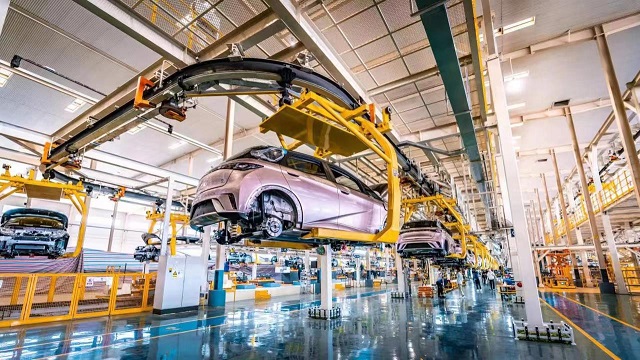
BYD, one of China’s biggest automakers, has issued a stunning warning: the country’s car manufacturing sector is on the brink of a massive shakeout. With the government cracking down on aggressive price wars, BYD predicts that about 100 automakers could be forced out of the market. This forecast signals a major upheaval in China’s already crowded automotive landscape.
Many brands that have thrived on heavy discounting to lure customers will now struggle to survive. This unsettling shift comes as Beijing moves to stop the deep price cuts it sees as harmful to the industry’s long-term health.
What’s behind the crackdown on price wars
7 things lower-middle-class families still display in the living room that say more than they realize
People who shower at night instead of in the morning share these 4 traits, according to psychology
For years, China’s electric vehicle (EV) market has been a battleground of steep discounts and incentives, with automakers slashing prices to win over consumers. But the government has recently stepped in to put an end to this “price war.” Their concern? Too much competition leading to an unhealthy market known as neijuan — a term meaning “involution” or destructive internal competition. This fierce rivalry has flooded the market with too many cars and driven down prices to unsustainable levels.
Stella Li, BYD’s executive vice president, told international media at the Munich auto show that the market must shake out many manufacturers. She stated, “Even 20 OEMs [original equipment manufacturers] are too many.” Eliminating brands that built business models relying primarily on discounts now seems inevitable.
The fate of China’s electric car brands
Last year, 129 brands sold electric or hybrid vehicles in China. But according to consulting firm AlixPartners, only 15 of these automakers are expected to remain financially viable by 2030. The intense consolidation predicted far exceeds earlier projections.
Xpeng, a rival EV maker to BYD, has foreseen the global auto industry consolidating down to just 10 major manufacturers in the next decade. If that happens, numerous smaller and mid-sized Chinese brands could disappear from the market entirely.
Even BYD, which competes with Tesla for the title of world’s largest EV manufacturer, hasn’t escaped troubles. Regulatory pressures this year curbed their revenue and profit growth. For instance, Beijing cracked down on extended payment terms to suppliers and limited discounts, which strained BYD’s margins in Q2.
Shrinking sales and revised outlooks
Germany tested the four-day workweek—73% of companies won’t go back
He bought a coal mine for $1.8 million—and stumbled upon metals worth up to $33 million
Financial institutions have already taken notice. Citi bank recently slashed its sales forecasts for BYD significantly. Previous estimates predicted BYD would sell 5.8 million vehicles this year, rising to 7.2 million in 2026 and 8.4 million in 2027.
Now, those numbers have dropped to 4.6 million this year, 5.4 million in 2026, and 6 million in 2027. In 2024 alone, BYD sold 4.3 million units, signaling growth but at a slower pace due to these new challenges.
Despite the pessimism, Stella Li remains confident. She emphasized the company’s resilient profits and strong fundamentals. However, she also acknowledged that many Chinese automakers will need to pursue expansion beyond China’s borders, even though entering foreign markets isn’t a simple task.
China’s auto industry looks beyond its borders
Many Chinese car companies are already setting their sights outside of China. BYD, for example, has been broadening its footprint in Europe, especially the UK, offering affordable models equipped with cutting-edge technology. Production is set to begin this year at BYD’s new factory in Hungary, which will help ramp up local supply eventually.
Other homegrown brands are following this trend. The government-owned Changan has started selling vehicles in Europe, while Leapmotor is exploring partnerships with European automakers to manufacture new electric SUVs in Spain.
This strategy reflects a larger lesson in business adaptability. The crackdown in China was unexpected for many, but companies like BYD are showing that success depends on flexibility and finding new markets—even if it comes with fresh challenges abroad.
Reflecting on this, I’m reminded of how industries worldwide often face sudden regulatory or market shifts. The ability to pivot and innovate, rather than cling to old tactics, often separates the winners from the losers in the long run. What do you think these upheavals mean for the future of electric vehicles globally? Could this shakeout lead to stronger, more sustainable players in the market?
Feel free to share your thoughts or experiences with electric cars, and don’t forget to pass this story along to anyone interested in the fast-changing world of automotive innovation.
link